
A coax assembly can pass continuity and still fail the product. The usual escape is a 50 ohm path quoted against a 75 ohm connector, a center conductor trimmed 0.4 mm short, or a shield termination that changes insertion loss after the first vibration cycle. "Build to standard" is not enough language for coax.
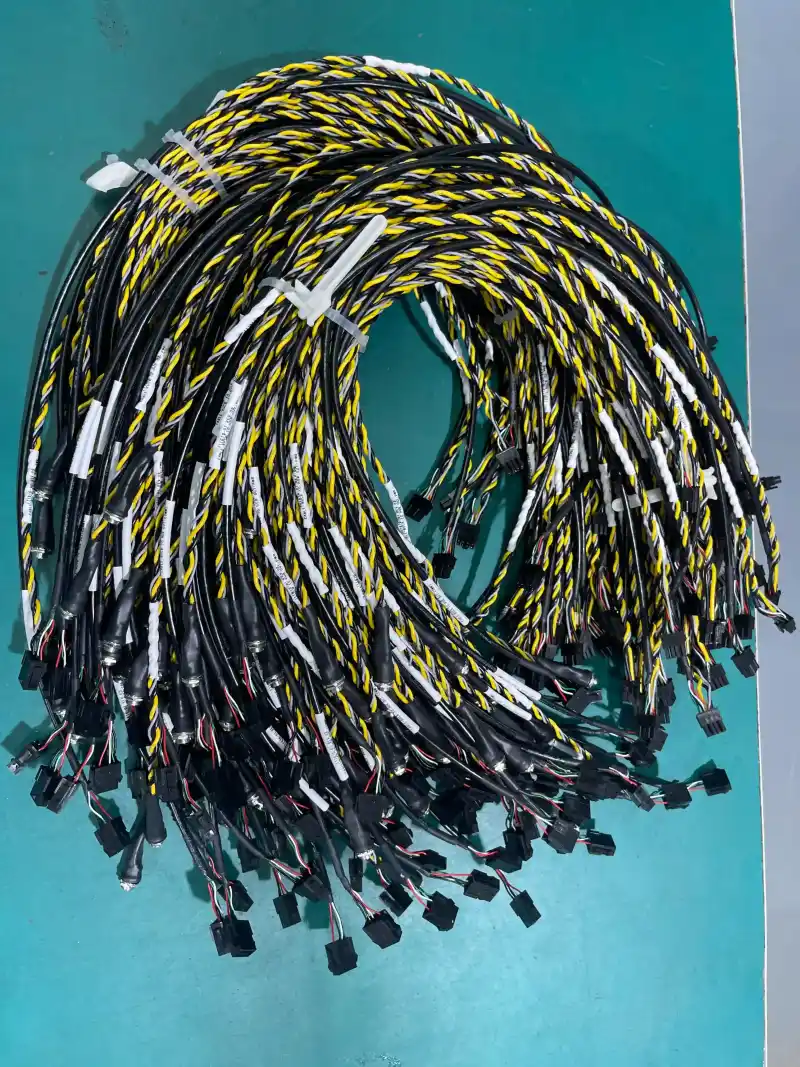
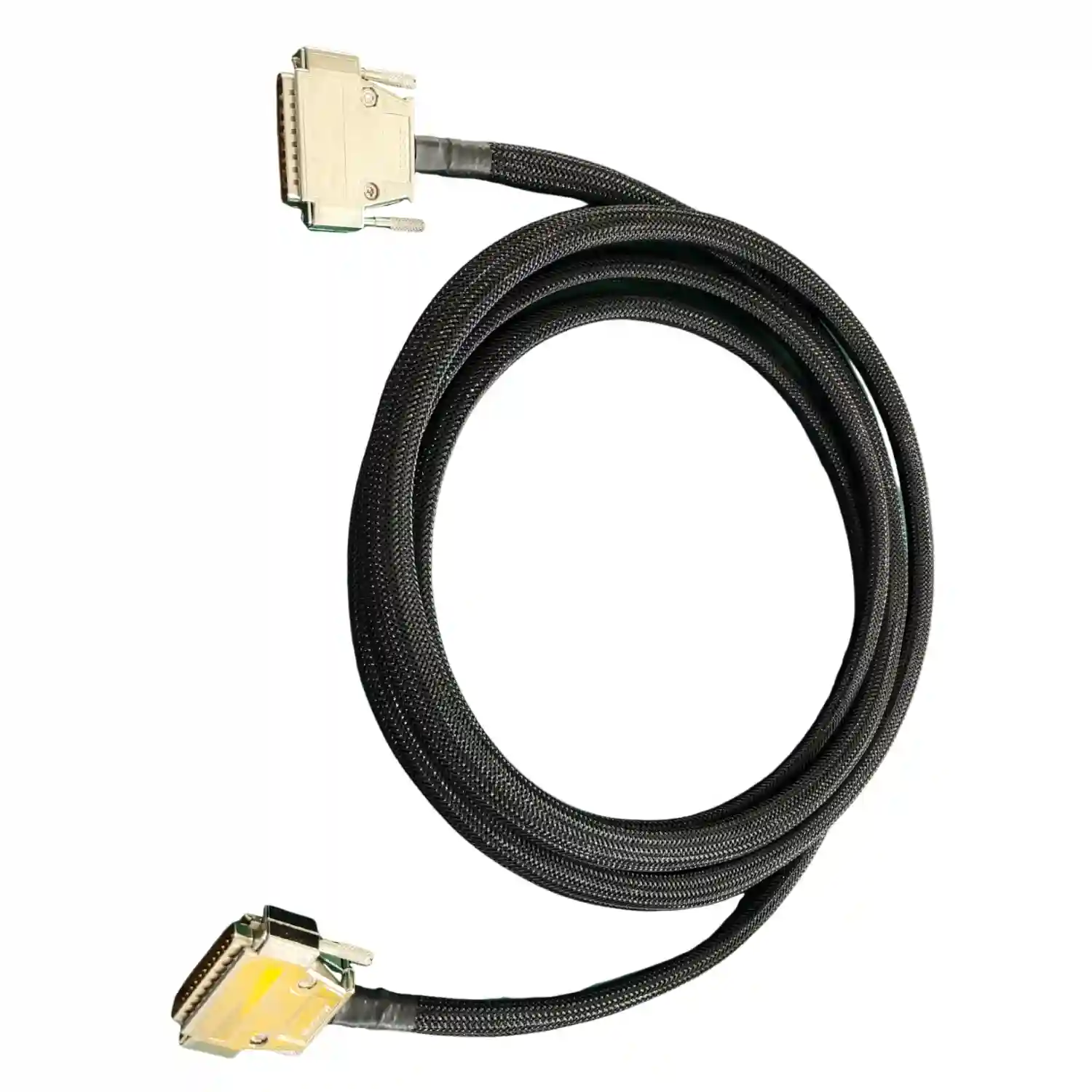
This is the standards stack we want to see before quoting Cable Assembly (hub) work that carries RF, camera, GNSS, antenna, sensor, or thermal-imaging signals. The drawing has to separate electrical performance from workmanship. A good RFQ tells the supplier what impedance to preserve, what cable family to use, what assembly standard governs workmanship, and what test method decides lot release.
Start with impedance, not connector shape
Coaxial cable is a controlled-impedance transmission line that uses a center conductor, dielectric, shield, and jacket to carry signal while limiting external coupling. For most industrial RF, cellular, GNSS, Wi-Fi, and measurement paths, the line is 50 ohm. For broadcast video, SDI-style paths, and some camera systems, the line is 75 ohm. The connector shell can look familiar while the dielectric and center-pin geometry are not compatible.
That is why we ask the impedance question before connector style. A request for "BNC cable, 300 mm" is incomplete. A request for "75 ohm BNC cable, 300 mm finished length, +/-5 mm tolerance, tested for continuity and shield isolation" is quotable. If the operating band is RF-sensitive, the drawing should add return loss, VSWR, or insertion-loss limits at the actual frequency. A 1 GHz camera jumper and a 6 GHz antenna lead should not share one generic pass label.
For Coaxial Cable Assemblies, impedance mismatch is a design and sourcing failure, not a cosmetic defect. Once a 50 ohm SMA is mated into a 75 ohm path, production inspection cannot repair the geometry. The BOM must call out the cable family, connector impedance, gender, polarity, orientation, and the mating interface. That one line prevents the most expensive class of rework: rebuilding finished assemblies after incoming inspection finds the wrong RF path.
Use the right standard for each layer of the build
There is no single coax clause that covers every industrial program. Standards divide by cable construction, connector interface, workmanship, and quality system. The RFQ needs to name the layer that matters instead of treating "coax standard" as one phrase.
| Requirement | Typical standard or control | What the RFQ should say |
|---|---|---|
| Transmission path | 50 ohm or 75 ohm impedance | State impedance on every coax line, not only on the schematic. |
| Cable construction | MIL-DTL-17 when military RF cable is specified | Call out the cable designation or approved equivalent list. |
| Wire and insulation recognition | UL 758 when the program requires recognized appliance wiring material | State the UL style or allow no UL claim. |
| Assembly workmanship | IPC/WHMA-A-620 Class 2 or Class 3 | Define visual, crimp, solder, strain-relief, and record requirements. |
| Hybrid circular shells | MIL-DTL-38999 when coax contacts sit inside qualified circular connectors | Separate shell qualification from coax termination acceptance. |
IPC/WHMA-A-620 is the workmanship standard we see most often on cable assemblies. It does not replace the RF drawing. It governs how the assembly is built and inspected: conductor damage, shield handling, solder wetting, crimp condition, insulation support, labels, and documentation. If the buyer requires Class 3, the cost and inspection burden change; the class decision should be made the same way we outline in IPC/WHMA-A-620 Class 2 vs Class 3 explained.
Connector and cable designations need to be locked together
Connector selection is not a separate purchasing task. SMA, SMB, BNC, TNC, MMCX, U.FL, and FAKRA all depend on the cable geometry they terminate. RG-58 is larger than micro-coax and easier to strain-relieve in many bench and control-panel assemblies, but it is physically different from RG-178, RG-316, and 1.13 mm micro-coax. A ferrule, dielectric support, and center-pin trim that works on RG-316 will not automatically work on a 100 mm micro-coax jumper.
For RF Cable Assemblies, we prefer a matched line item: connector family, exact impedance, cable family, finished length, length tolerance, minimum bend radius, exit orientation, and test requirement. If the connector OEM has a strip-length table, the production work instruction should follow that table. If the drawing allows alternate cable, the alternate must still meet impedance, jacket temperature, bend radius, and loss limits. "Equivalent coax" without those numbers is a substitution risk.
FAKRA adds another layer because the color and mechanical key are part of the assembly definition. A blue housing and a curry housing are not interchangeable just because the coax core looks the same. Automotive and mobile equipment programs also bring vibration, temperature cycling, and service handling into the decision. We treat service access and bend protection as RF controls, not packaging details.
Testing has to match the failure mode
Continuity catches opens and shorts. It does not prove RF performance. A coax assembly can show center-to-center continuity and shield continuity while still carrying too much insertion loss because the dielectric was nicked, the braid was folded incorrectly, or the center conductor is short. The RFQ should state which tests are required at release and which are first-article only.
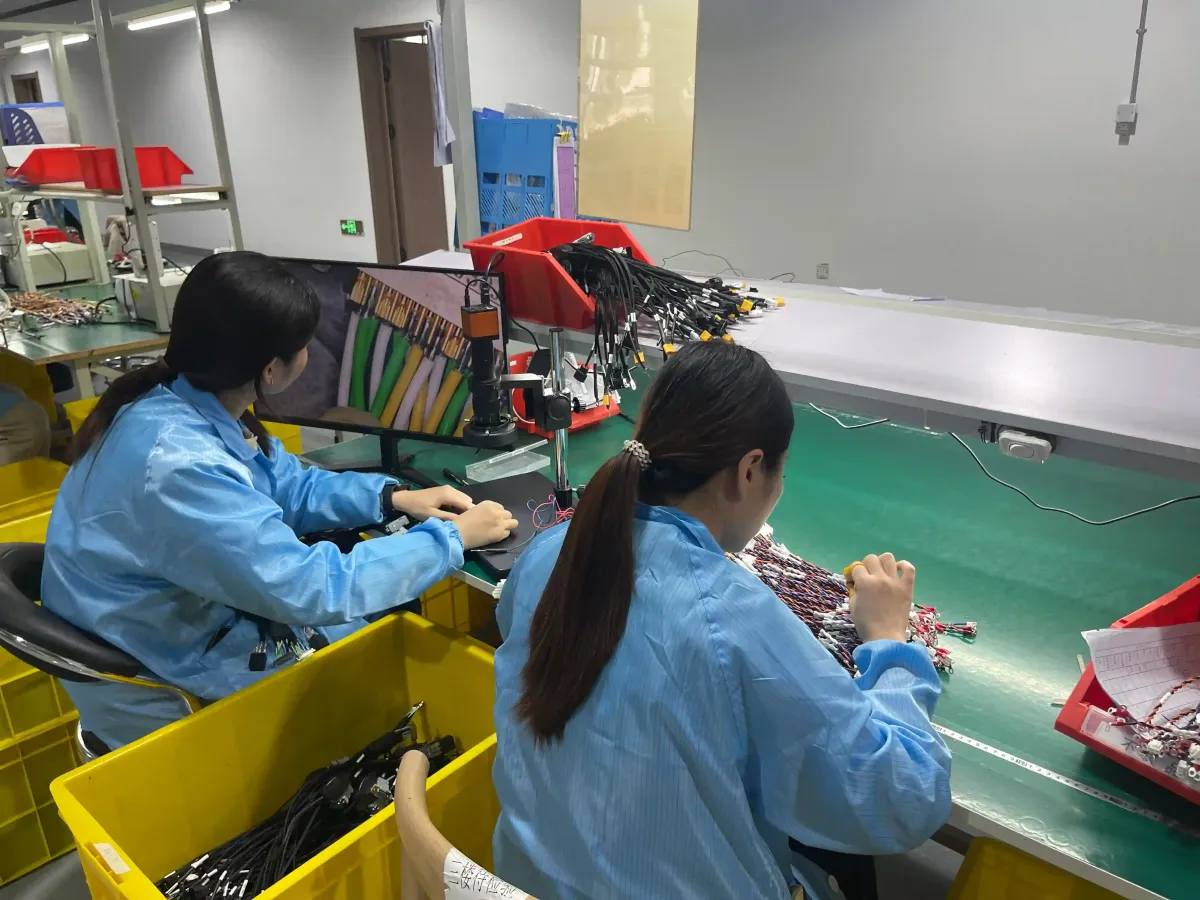
A practical production plan separates three gates. First, 100% continuity and shield isolation confirm the electrical path. Second, visual inspection checks strip length, braid foldback, dielectric face, jacket support, label, and connector seating. Third, RF-sensitive programs add customer-defined insertion loss, return loss, VSWR, or TDR checks through the agreed fixture. The acceptance limit belongs on the drawing; a supplier should not invent a VSWR threshold after receiving a PO.
VeinWire's Testing & Inspection review is built around that distinction. The manufacturing partner may use Cirris 1000H fixtures for continuity and shorts where the geometry supports fixture access. RF electrical acceptance needs the buyer's limit, fixture, and frequency point documented before first article. For cosmetic checks on stable production, AQL 1.0 may be acceptable; for first article, impedance-sensitive lots, or 100 mm micro-coax jumpers, VeinWire requires 100% inspection until the manufacturing partner's process data supports relaxing it.
How VeinWire handles this on customer programs
We treat coax intake as a DFM gate before pricing. Engineering checks six items before release: impedance, connector interface, cable family, finished length tolerance, bend radius, and test method. If any one of those is missing, the quote is conditional because the missing item can change tooling, stock, fixture design, or lot acceptance.
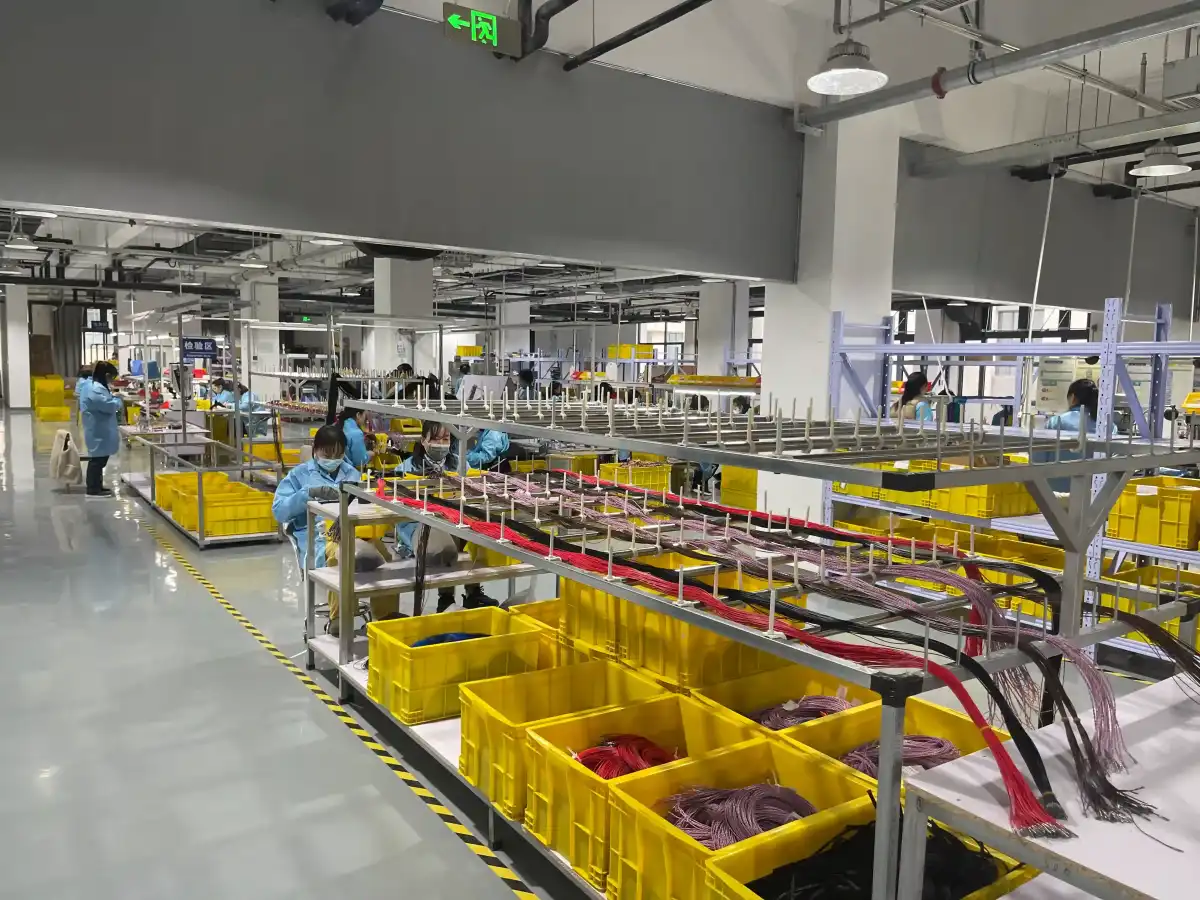
After requirements are released, VeinWire coordinates the control plan and places the order with the manufacturing partner. The partner's operators build from a controlled strip chart tied to the connector and cable combination. The partner inspects the setup piece for center-conductor exposure, dielectric condition, braid foldback, ferrule position, jacket support, and connector seating before the lot proceeds. For crimped RF connectors, the partner checks crimp height or ferrule compression against the connector OEM instruction. For soldered RF terminations, the partner applies IPC/WHMA-A-620 workmanship criteria to solder wetting and insulation damage, while the RF test still controls the signal path.
The quality record follows the risk. Prototype lots may receive 100% visual, 100% continuity, and first-article RF test. Mature repeat lots can move some visual attributes to AQL after stable yield is documented. We do not move impedance, connector identity, or customer-defined RF tests into guesswork. Coax escapes are usually expensive because the assembly often sits deep inside a product; rework after enclosure build can cost more than the cable itself.
Production approach: AWG #40 micro-coax assemblies require controlled impedance limits and a test method defined before the beta production series begins.
Verification scope: Fine conductor geometry makes fixture selection, reference planes, frequency points, and acceptance limits part of the build specification.
What we do: Align the impedance specification and test method with the customer's engineering team, coordinate verification samples and partner-issued test reports, and add first-article impedance testing to the production release plan.
Result: Each impedance-sensitive micro-coax build receives a documented, repeatable release gate for production.
Key factors: AWG #40 micro-coax; documented impedance limits; specification and test-method alignment; first-article verification.
When to contact us
Bring VeinWire in before the coax drawing is frozen if the assembly has mixed 50 ohm and 75 ohm paths, micro-coax below 1.37 mm, FAKRA keying, SMA or MMCX terminations, a Class 3 workmanship requirement, or an RF test limit that must survive production release. We are also a fit when a 5-50 unit pilot has to scale into 500-5000 assemblies without changing the cable family after qualification.
Have a drawing or BOM? Submit it at /contact — engineering walks every drawing within 4 business hours.