
Every harness RFQ I review carries a one-line workmanship clause: "IPC/WHMA-A-620 Class 2" or "IPC/WHMA-A-620 Class 3". Procurement teams pick one and move on. Six months later, engineering complains about the cost, or quality complains about the failures. The two classes are not a free upgrade — they encode different inspection criteria, different rework allowances, and different operator qualification expectations. Pick wrong and you either overpay for irrelevant rigor or you ship product that fails IQC for reasons your buyer cannot articulate.
This article is the breakdown we give engineers before they finalize the workmanship line in a contract. We have built to both classes across medical, automotive, and aerospace programs since 2003, and the differences are concrete, measurable, and quotable to four decimal places of cost per unit.
What IPC/WHMA-A-620 actually is
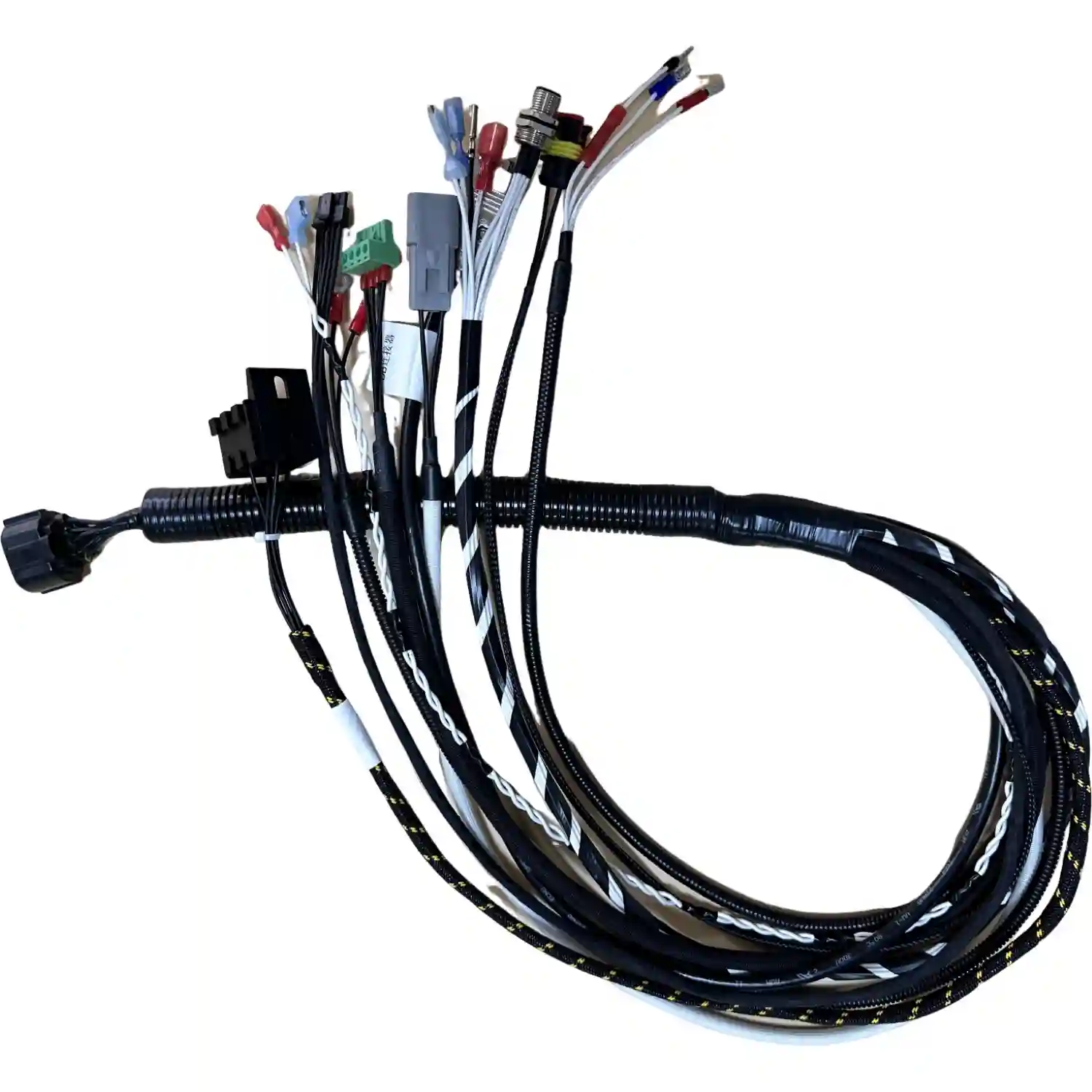
IPC/WHMA-A-620 is the consensus workmanship standard for cable and wire-harness assemblies, jointly published by IPC and the Wiring Harness Manufacturers Association. It defines acceptance criteria for crimping, soldering, ultrasonic splicing, insulation displacement, overmolding, and all the operations that turn raw wire and connectors into a deliverable assembly. The standard itself is paid content, but the official scope is described publicly on the IPC trade association entry.
The standard splits into three classes:
- Class 1 — General electronic products. Consumer-grade. Function matters; cosmetics do not. We almost never quote to Class 1 because B2B procurement teams rarely accept it.
- Class 2 — Dedicated service electronic products. Continued performance and extended life required. Most industrial, telecom, and commercial OEM work lands here.
- Class 3 — High-performance electronic products. Continued reliable performance is critical; field repair is impractical or impossible. Medical, aerospace, and life-support belong here.
The class is not a single criterion — it is a multi-dimensional acceptance schedule applied to every operation in the assembly.
The acceptance-criteria deltas that matter
The places Class 2 and Class 3 differ in the standard are not exotic. They are the same operations you already do; the tolerance windows just shrink.
1. Crimp wire bend / wire whisker tolerance
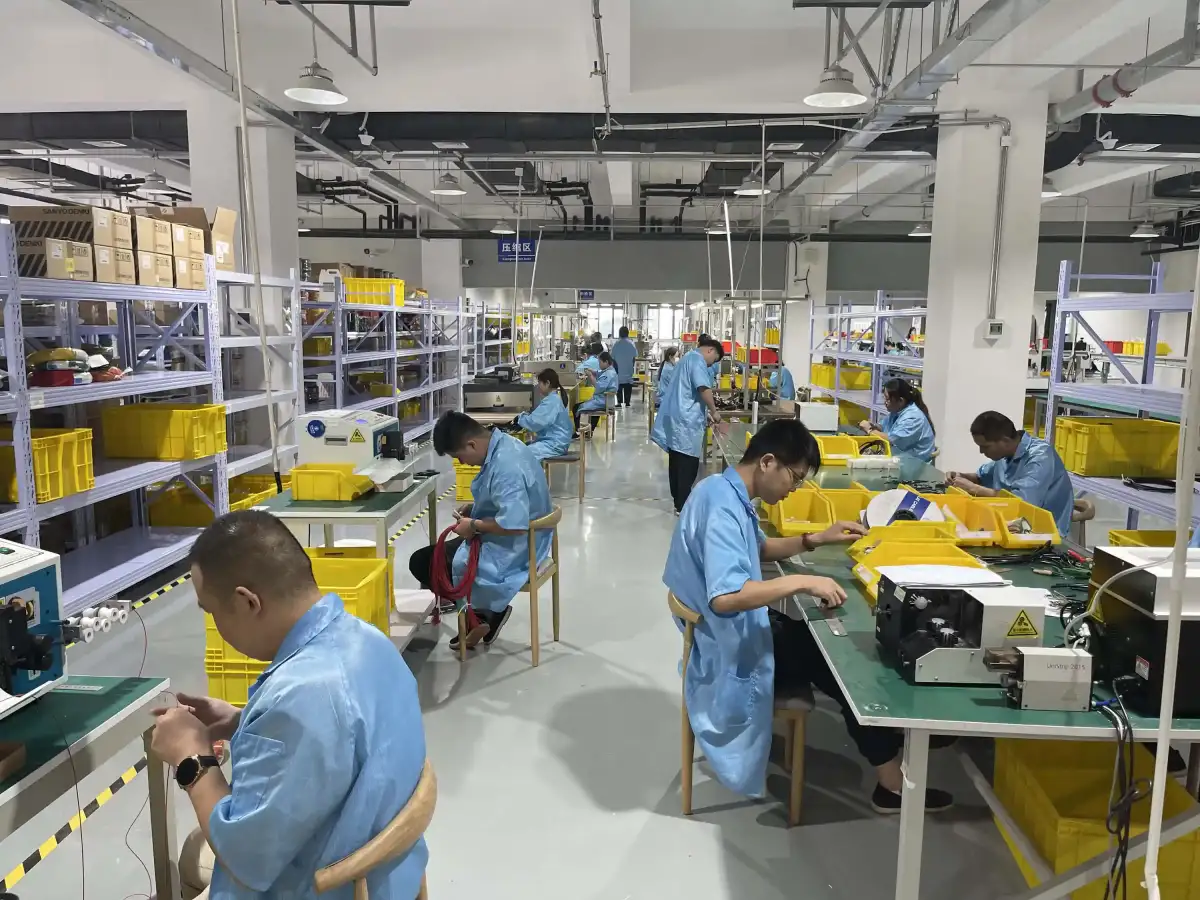
Class 2 allows minor exposed strand whiskers outside the crimp barrel as long as they do not bridge to an adjacent contact and do not exceed one wire diameter. Class 3 disallows any visible whisker outside the inspection window. In practice, this means Class 3 lines burn more wire stock on operator-pulled rejects, and crimp operators run at roughly 70% of their Class 2 throughput because they re-strip-and-re-crimp on the slightest visual defect.
2. Insulation clearance from the crimp barrel
Both classes specify that insulation should not be crushed inside the conductor crimp. Class 3 additionally tightens the allowable gap between insulation end and conductor crimp barrel. A 0.5 mm overshoot that passes Class 2 will be rejected at Class 3. This is the single most common source of Class 3 IQC rejects we see at incoming inspection.
3. Solder joint criteria (J-STD-001 alignment)
Class 2 solder joints allow some pinholes and minor exposed copper at the toe of a stripped wire. Class 3 requires full wetting on all visible surfaces and zero pinholes. The standard cross-references J-STD-001 for soldering acceptability, so a Class 3 harness build pulls J-STD-001 Class 3 solder requirements as well — operators must be J-STD-001 certified, not just IPC-620 certified.
4. Overmolding void and inclusion criteria
Class 2 permits internal voids in overmolds up to a defined volume, as long as the void does not breach the strain-relief geometry. Class 3 caps void volume tighter and disallows any void within a critical zone around the wire-to-conductor interface. We see this most often on IP67/IP68 overmolds, where Class 3 voids force the part to fail water-immersion qualification long before they show up as functional failures.
5. Test coverage requirements
Class 2 typically passes with 100% continuity and 100% visual inspection. Class 3 mandates 100% continuity, 100% visual to Class 3 acceptability, plus documented test records traceable to operator badge ID, test fixture serial, and calibration date. The data-collection burden is real and shows up as overhead on every shipment.
When Class 3 is mandatory, not optional
Specifying Class 3 because it sounds safer is a procurement antipattern. Specify Class 3 because your application or your buyer requires it. The programs where Class 3 is not negotiable:
- Class III medical devices regulated by the US FDA — implantables, life-support, and patient-monitoring systems where field failure leads to harm. ISO 13485 quality systems and IEC 60601-1 safety standards typically pull Class 3 workmanship by reference.
- Aerospace primary flight controls and avionics per AS9100 and the relevant airframe spec (Boeing D6, Airbus ABS, etc.).
- Military and defense programs citing MIL-STD-1130, MIL-W-22759, or any program clause that references "high-reliability" workmanship.
- Space hardware per NASA-STD-8739.4 and equivalent ECSS specifications. Space programs almost universally require Class 3 plus additional supplier audits.
- EV traction harnesses when the OEM is risk-averse and the harness routes through high-vibration or thermal-stress zones. High-voltage EV harnesses sometimes ship at Class 2 if the OEM's own internal spec is lighter.
If your application is industrial automation, robotics for non-life-critical roles, telecom, networking, or commercial appliances, Class 2 is the right answer 90% of the time. Industrial automation programs default to Class 2 unless a downstream OEM mandates otherwise.
The real cost delta
The honest number from our shop floor, averaged across 18 months of mixed builds at both classes on similar assembly geometries:
| Cost driver | Class 2 baseline | Class 3 delta |
|---|---|---|
| Operator throughput (crimps/hour) | 180-220 | -25% to -30% |
| Scrap rate (wire stock) | 0.8-1.2% | +1.5% to +2.5% |
| IQC rework loop (rejects/1000 units) | 3-7 | +12 to +20 |
| Documentation overhead (per shipment) | 30-45 min | +2-4 hours |
| Net per-unit cost premium | — | +18% to +35% |
That 18-35% premium is not optional once you specify Class 3. It is the standard. Suppliers who quote you Class 3 at Class 2 prices are either misunderstanding the standard or planning to ship to Class 2 and label it Class 3.
How to specify it correctly in your RFQ
The line that matters in your RFQ is not "build to Class 3" — it is the cross-reference set. A complete workmanship specification looks like this:
Workmanship to IPC/WHMA-A-620 Class 3, current revision. Solder operations to J-STD-001 Class 3. Inspection records traceable to operator and date. Certificate of Conformance per shipment. Optional first-article inspection report per AS9102 if required.
That four-sentence block tells a competent supplier exactly what you want and forecloses the ambiguity that leads to disputes at receiving inspection. For a deeper procurement-side view on what else to put in an RFQ, see our RFQ checklist.
Case in production
An AI and robotics technology company required custom cable assemblies integrating multiple premium connector brands for their advanced automation systems.
Challenge: The client needed a contract manufacturer capable of sourcing and assembling custom cables using a diverse mix of connector brands (JST, TE, MOLEX, ANDERSON, SUMITOMO) while ensuring compliance with rigorous quality standards for high-reliability robotic applications.
What we did: Consolidated multi-brand connector sourcing and custom assembly under ISO 9001:2015 and IATF 16949:2016 certified manufacturing processes, strictly adhering to IPC/WHMA-A-620 production standards to meet the client's high-reliability requirements.
Result: Successfully qualified as the manufacturing partner, securing an initial production order and establishing a baseline for ongoing high-tech robotics manufacturing support.
Concrete numbers: ISO 9001:2015, IATF 16949:2016, IPC/WHMA-A-620, 5 premium connector brands (JST, TE, MOLEX, ANDERSON, SUMITOMO), 1 initial production order
Bottom line
Pick Class 2 by default for industrial, commercial, and consumer-adjacent B2B programs. Pick Class 3 when your customer, your regulator, or your application physics demands it. Do not pick Class 3 because it sounds safer; that decision will cost you 18-35% per unit forever and will not buy you reliability you can measure. When in doubt, walk the application risk profile with your supplier's engineering team before the class line gets locked into a master agreement.