
RG58 gets specified by habit because it is familiar, stocked, and easy to terminate. That habit becomes expensive when a 50 ohm cable is routed like hookup wire, paired with the wrong ferrule, or accepted by continuity test only. The defect rarely looks dramatic: a 0.4 mm dielectric pushback, a loose braid capture, or a VSWR limit no one wrote into the RFQ.
This is the selection note we use before quoting Cable Assembly (hub) work that includes RG58. The cable still has a place in OEM builds, but only when length, connector family, and RF acceptance criteria are explicit before the first article is built.
RG58 is a 50 ohm coax, not a commodity wire
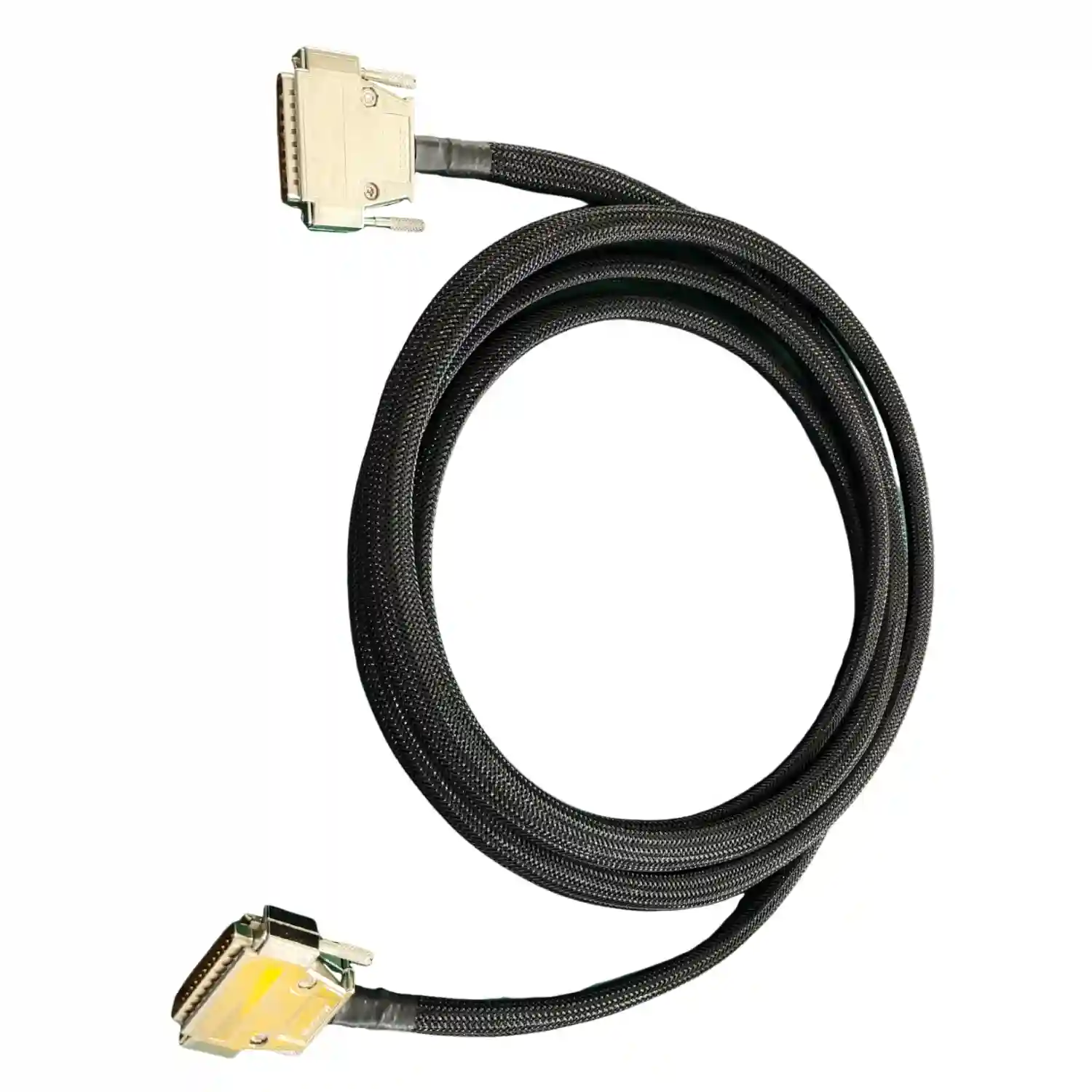
RG58 coaxial cable is a 50 ohm coaxial cable family used for short RF, antenna, instrument, and industrial-control signal runs. Common commercial RG58 constructions sit near 0.195 in / 4.95 mm outside diameter, with a center conductor, dielectric, braided shield, and outer jacket. The exact center-conductor construction, shield coverage, velocity factor, jacket material, and temperature rating depend on the cable suffix and manufacturer datasheet.
The engineering mistake is treating "RG58" as a complete specification. It is not. An RFQ should call out the exact cable variant, impedance, finished length, length tolerance, connector interface, connector orientation, jacket requirement, and test limit. A 300 mm BNC-to-BNC RG58 jumper for a bench fixture is a different build from a 2.5 m TNC-to-N-type RG58 assembly on a vibrating machine frame.
For Coaxial Cable Assemblies, we ask for the operating frequency and maximum VSWR target early because RG58 is often chosen for sub-1 GHz or low-GHz service where mechanical convenience matters as much as loss. If the program is running above 3 GHz, needs low insertion loss over several meters, or must stay phase-stable through temperature cycling, we usually compare RG58 against RG316, RG400, LMR-200, or LMR-400 before releasing a quote.
Where RG58 still fits
RG58 remains useful when the run is short, the impedance is 50 ohm, the cable needs more body than micro-coax, and the connector family is already built around standard crimp or clamp terminations. Typical matches include BNC on test fixtures, TNC on industrial radios, N-type on lower-frequency antenna leads, and some SMA assemblies where the connector manufacturer publishes an RG58 ferrule option.
| Use case | Why RG58 can work | Production control |
|---|---|---|
| Bench test jumper | 50 ohm path, short length, frequent technician handling | BNC or TNC connector fit checked against cable OD |
| Industrial antenna lead | Moderate flexibility and field-serviceable connector size | Strain relief added at the panel exit |
| VHF / UHF radio harness | Short run with familiar 50 ohm connector interfaces | VSWR sweep on first article, not continuity only |
| Production test fixture | Durable jacket and repeatable routing in a fixed fixture | Finished length controlled to +/-5 mm unless the fixture needs tighter |
| Legacy equipment service cable | Matches an existing BNC, TNC, or N-type interface | Incoming connector stock verified against the old mating part |
The same table also shows the limit. RG58 is not the right default for compact camera modules, high-density boards, automotive 75 ohm links, or long low-loss antenna runs. For those, RF Cable Assemblies usually move to smaller micro-coax, automotive coax, semi-rigid cable, or an LMR family cable with lower loss.
The three RFQ lines that prevent most RG58 failures
The first line is impedance: write "50 ohm" on the drawing. Do not assume the connector shape communicates it. BNC, F-type, FAKRA, and some other interfaces exist in multiple impedance ecosystems, and a procurement substitution can pass visually while failing electrically. If the system is automotive 75 ohm, the correct path is usually a FAKRA or another 75 ohm interface, not standard RG58.
The second line is connector and tooling compatibility. RG58 has enough diameter that the ferrule, dielectric bore, and crimp die matter. On the manufacturing partner's floor, RG58 RF builds are tied to the connector OEM strip chart and the matched tooling callout, such as Daniels DMC AFM8, M22520/5-01, or Pasternack PE5026 where the connector series requires hex crimp. A generic hand crimper can make a part that looks seated and still leaves braid strands folded under the ferrule.
The third line is test acceptance. For production work we treat continuity as a safety gate, not an RF gate. A reasonable drawing might require 100% continuity and shield isolation, then first-article VSWR from 100 MHz to the highest operating frequency on a Keysight FieldFox N9952A. Mature lots can move to AQL 1.0 sample resweep if the first article and process controls are stable. Military or aerospace-adjacent programs may also call out MIL-DTL-17 cable, MIL-PRF-39012 connector requirements, or IPC/WHMA-A-620 workmanship language; the public IPC standards body overview gives context for the workmanship framework.
How VeinWire handles this on customer programs
We start with DFM before a quote number goes out: cable suffix, jacket, impedance, connector family, finished length, bend radius, operating frequency, and the inspection record the buyer expects. If the drawing only says "RG58 cable, BNC male both ends," engineering stops the quote until the missing RF limits are filled in. That pause is faster than rebuilding a 500-piece pilot lot after the customer's RF engineer rejects the sweep.
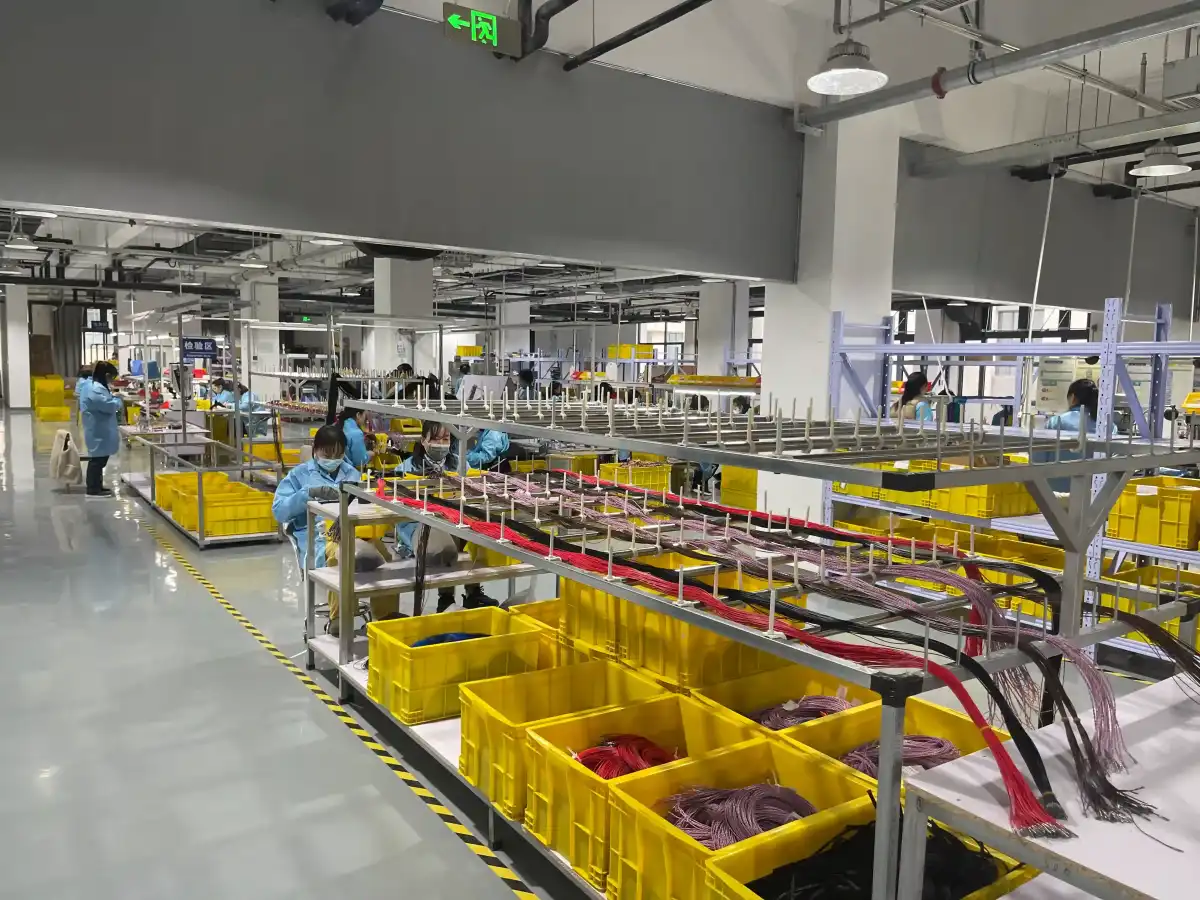
After requirements are released, VeinWire coordinates the control plan and places the order with the manufacturing partner. On the partner's production traveler, RG58 termination is controlled by strip dimensions, not operator memory. The partner ties jacket strip, braid comb, dielectric trim, center-conductor exposure, ferrule position, and crimp die to the connector drawing and checks center conductor extension against the connector reference plane. On RF-sensitive assemblies, the partner holds the practical inspection window to +/-0.1 mm because that is enough movement to show up as return-loss drift at GHz frequencies.
The manufacturing partner performs electrical release against the specified failure mode. Its Cirris 1000H continuity test catches opens, shorts, and shield-isolation faults, while its FieldFox sweep data catches impedance discontinuity, dielectric pushback, and connector-launch problems. VeinWire reviews that evidence before treating RG58 work carrying radio, antenna, or measurement signals as releasable.
Case in production: An industrial OEM R&D program required custom cable assemblies, starting with small prototype batches and scaling to mass production.
Challenge: Managing the transition from 10-20 piece sample orders to a 500-unit MOQ mass production while maintaining consistent quality and meeting aggressive 2-3 week lead times.
What we did: Coordinated flexible sample manufacturing through a manufacturing partner and streamlined payment for fast procurement, followed by a structured partner production setup with MOQ 500 sets and capacity planning for annual volumes of 5-10K units.
Result: Successfully transitioned from prototype to mass production, securing a multi-year repeat program with annual volumes reaching 5,000-10,000 units.
Concrete numbers: Sample qty: 10-20 pcs, MOQ: 500 sets, Annual volume: 5-10K units, Standard lead time: 2-3 weeks
The lesson generalizes to any RG58 program: impedance defects are process defects until the test method proves otherwise. When the customer lab and supplier line use different definitions, the lot can fail even when both sides think they are testing correctly. We now force the test method, fixture, and acceptance limit into the traveler before repeat production begins.
When to choose a different coax
Choose RG316 when the assembly needs PTFE insulation, higher temperature stability, or a smaller cable body. Choose RG400 when the program needs lower loss than RG58 in a similar RF ecosystem. Choose LMR-200 or LMR-400 when the antenna run is longer and insertion loss matters more than cable flexibility. Choose micro-coax when the connector is U.FL, MHF4, CABLINE, or another board-level interface where a 4.95 mm cable body cannot be routed.
For Industrial Automation equipment, the practical dividing line is usually mechanical first: enclosure space, connector service access, bend radius, washdown exposure, and technician handling. The electrical line comes next: 50 ohm vs 75 ohm, maximum frequency, insertion-loss budget, and whether the buyer needs a saved VSWR trace with each first article.
When to contact us
Bring VeinWire in when the drawing has RG58 but the connector, length tolerance, VSWR target, or test frequency is still open. We are also a fit when a 5-50 unit pilot has to scale to 500-5000 assemblies without changing the cable family after qualification, or when a legacy BNC/TNC/N-type interface has to be rebuilt with modern inspection records.
Have a drawing or BOM? Submit it at /contact — engineering walks every drawing within 4 business hours.