
An RF assembly can pass continuity and still fail the product. The defect is not open-circuit; it is 2 dB of insertion loss after the connector was over-crimped, a 50 ohm path mated to a 75 ohm jack, or a center conductor trimmed 0.4 mm short. Connector type is the first sourcing decision that determines whether those failures are controllable in production.
This article is the selection logic we use before quoting Cable Assembly (hub) work that carries radio, antenna, sensor, GNSS, Wi-Fi, camera, or measurement signals. The names are familiar: SMA, SMB, BNC, TNC, FAKRA, MMCX, U.FL, and N-Type. The production risks behind them are not interchangeable.
Start with impedance before connector shape
RF connector families often come in 50 ohm and 75 ohm versions, and the wrong impedance is a design error, not a purchasing substitution. Most industrial wireless, GNSS, cellular, Wi-Fi, and test-instrument assemblies use 50 ohm transmission paths. Broadcast video, SDI, and some legacy instrumentation paths use 75 ohm. The mechanical shell may look similar, especially around BNC, but the dielectric geometry and center-pin dimensions are different.
For RF Cable Assemblies, we ask for impedance, operating frequency, maximum insertion loss, cable family, connector gender, keying, and mating interface on the first RFQ pass. If the drawing only says "BNC cable, 300 mm," engineering has to stop and ask whether the path is 50 ohm or 75 ohm before quoting. That one missing line can change connector stock, crimp die, test fixture, and the acceptance limit.
A practical rule: do not select the connector by panel hole first. Select the RF path first, then confirm the connector can survive the mechanical environment. A 50 ohm SMA on RG-316 may be electrically correct to 6 GHz in a benchtop instrument, but it is a poor choice on a vibrating outdoor module if the mating thread is left unsupported and the cable exits with no strain relief.
SMA and RP-SMA: threaded small-format RF
SMA is the default small threaded connector for 50 ohm RF assemblies because it is compact, repeatable, and widely available. Standard SMA interfaces are commonly specified to 18 GHz when the connector and cable are both rated for that band; many production assemblies are run far lower, often below 6 GHz for antenna leads and sensor modules. Reverse-polarity SMA changes the gender of the center contact and is common in Wi-Fi equipment, so the BOM must call out RP-SMA explicitly.
The assembly risk is not naming the interface; it is maintaining the center-conductor length and dielectric support through the crimp or solder operation. A small trim error can move the launch geometry enough to show up as return-loss drift. On low-volume prototypes, the manufacturing partner may hand-solder some SMA terminations, while production uses the connector OEM's strip-length table and the specified ferrule crimp tooling. If the cable is RG-178, RG-316, or 1.13 mm micro-coax, those are three different strip programs and three different handling risks.
SMA is a good fit when the application needs a threaded interface, compact size, and controlled performance above the frequency range where SMB or MMCX starts to feel marginal. It is a poor fit when operators or end users will mate and unmate the connector daily without torque control; the threads survive, but the cable exit and panel support usually become the field failure.
BNC, TNC, and N-Type: larger interfaces for service access
BNC is easy to service because the bayonet lock is fast, visible, and hard to cross-thread. That is why it remains common on lab equipment, measurement systems, cameras, and some industrial controls. The tradeoff is frequency headroom. Many BNC connectors are specified around 4 GHz in 50 ohm versions, while 75 ohm BNC is selected for video paths where impedance match matters more than compactness.
TNC keeps the same general size class but moves to a threaded coupling nut. That improves vibration resistance and pushes many connector series higher in usable frequency, commonly around 11 GHz depending on the manufacturer and cable. If an outdoor antenna lead sees vibration, washdown, or technician service, TNC often makes more sense than BNC even when the unit cost is higher.
N-Type is larger again, but it earns the space on outdoor RF, base-station, marine, and higher-power assemblies. It gives the mechanical interface more area, better grip, and a more forgiving service experience with gloved hands. The downside is routing: the bend radius of the attached coax and the mass of the connector have to be designed into the enclosure, not discovered after the first pilot build.
SMB, MMCX, U.FL, and FAKRA: compact connectors with handling limits
Push-on and snap-on RF connectors save board and enclosure space, but they move the risk into handling. SMB is compact and fast to mate, often used below 4 GHz. MMCX is smaller and can be useful in embedded modules, but its retention force and rotation behavior must match the cable routing. U.FL and MHF-style micro-coax connectors are even smaller; the mating cycles are limited and the cable exit is easy to damage if an operator uses the cable as a pull tab.
FAKRA adds automotive keying and color coding around a coaxial core. It is common for GNSS, cellular, camera, and antenna links in vehicles and mobile equipment. The keyed housings reduce assembly mistakes, but they do not remove RF risk. The inner coax termination still has to meet the cable manufacturer's strip dimensions, and the outer housing has to be seated fully enough to lock. For vehicle-adjacent programs, we treat Industrial Automation and mobility builds differently from indoor controls because vibration, temperature cycling, and service access change the connector choice.
Small RF connectors are not automatically worse than large ones. They are less forgiving. If the drawing calls for a 100 mm micro-coax jumper with U.FL on one end and MMCX on the other, the production plan has to include controlled strip length, protected packaging, and an inspection point for latch damage before shipment.
Cable and connector have to be selected together
The connector cannot rescue the wrong coax. RG-174 is flexible and familiar, but it has higher loss than RG-316 at many frequencies and may not satisfy temperature or bend-life requirements. RG-316 uses PTFE dielectric and is common where higher temperature and better stability matter. 1.13 mm and 1.37 mm micro-coax are useful inside compact devices, but they need gentle routing and dedicated stripping controls. Larger low-loss coax improves electrical performance but can overload a small connector or violate the minimum bend radius in the enclosure.
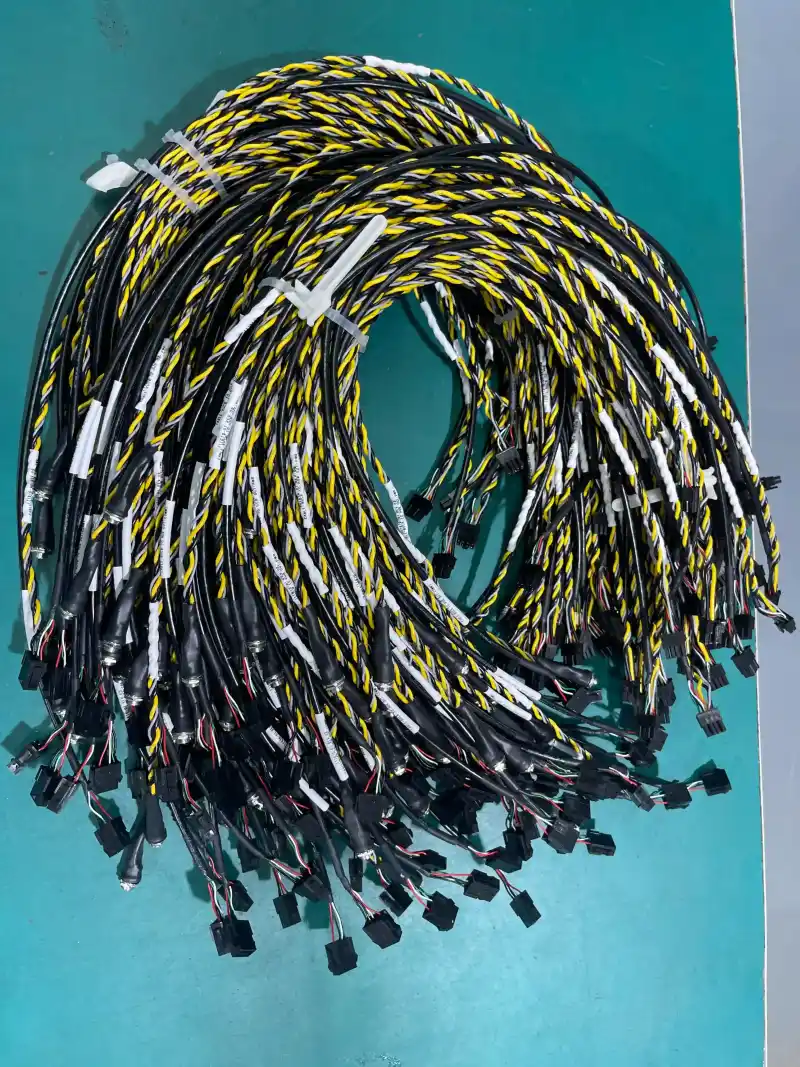
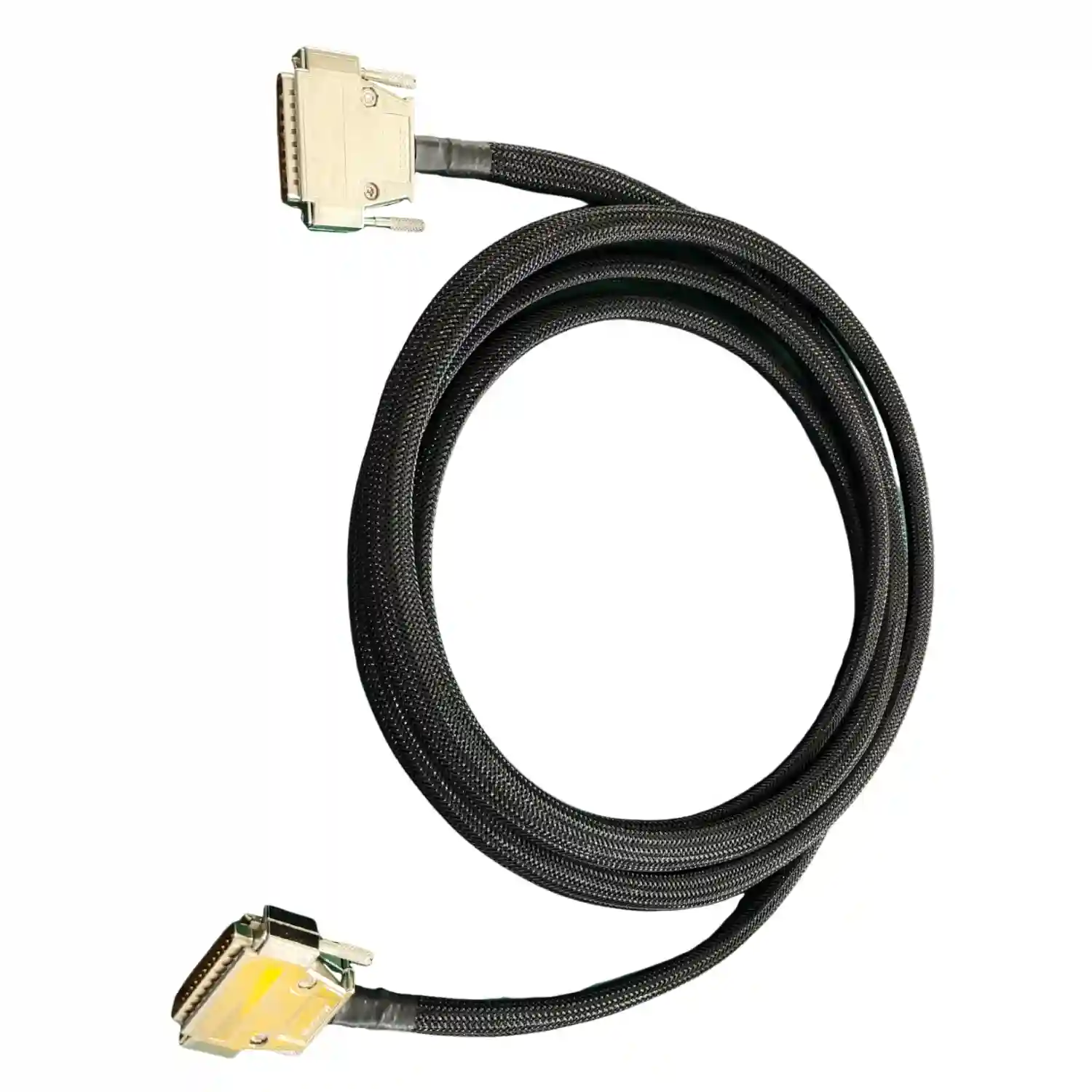
For Coaxial Cable Assemblies, we prefer to quote the cable and connector as a matched set: cable family, jacket material, impedance, finished length, length tolerance, connector interface, orientation, and test requirement. A 500 mm RG-316 SMA jumper with +/-5 mm length tolerance is a different build from a 100 mm 1.13 mm U.FL jumper with +/-2 mm tolerance. Both may carry the same RF signal on the schematic; they do not carry the same production risk.
Standards language matters here. For military and aerospace-adjacent RF work, MIL-DTL-39012 defines many RF connector requirements, while MIL-DTL-38999 appears when RF contacts are integrated into circular connector shells. For workmanship, VeinWire requires the manufacturing partner to tie harness operations to IPC/WHMA-A-620 and add RF-specific electrical tests where the customer requires them.
How VeinWire handles this on customer programs
We do not treat RF as continuity-only cable work. The first gate is DFM: impedance, frequency, cable type, connector family, length tolerance, bend radius, and packaging method are checked before quote release. If the drawing omits a mating connector, we flag it because RF gender and polarity mistakes are expensive after tooling is loaded.
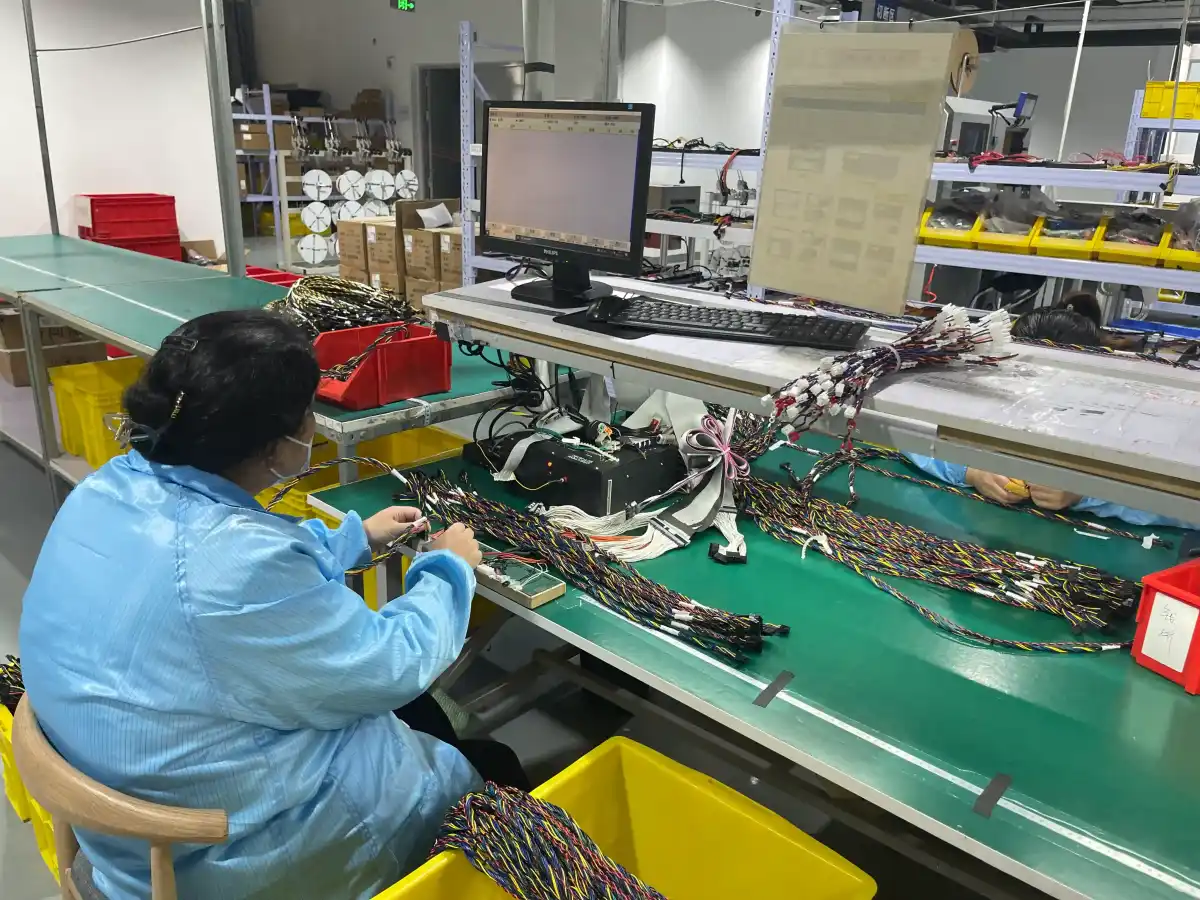
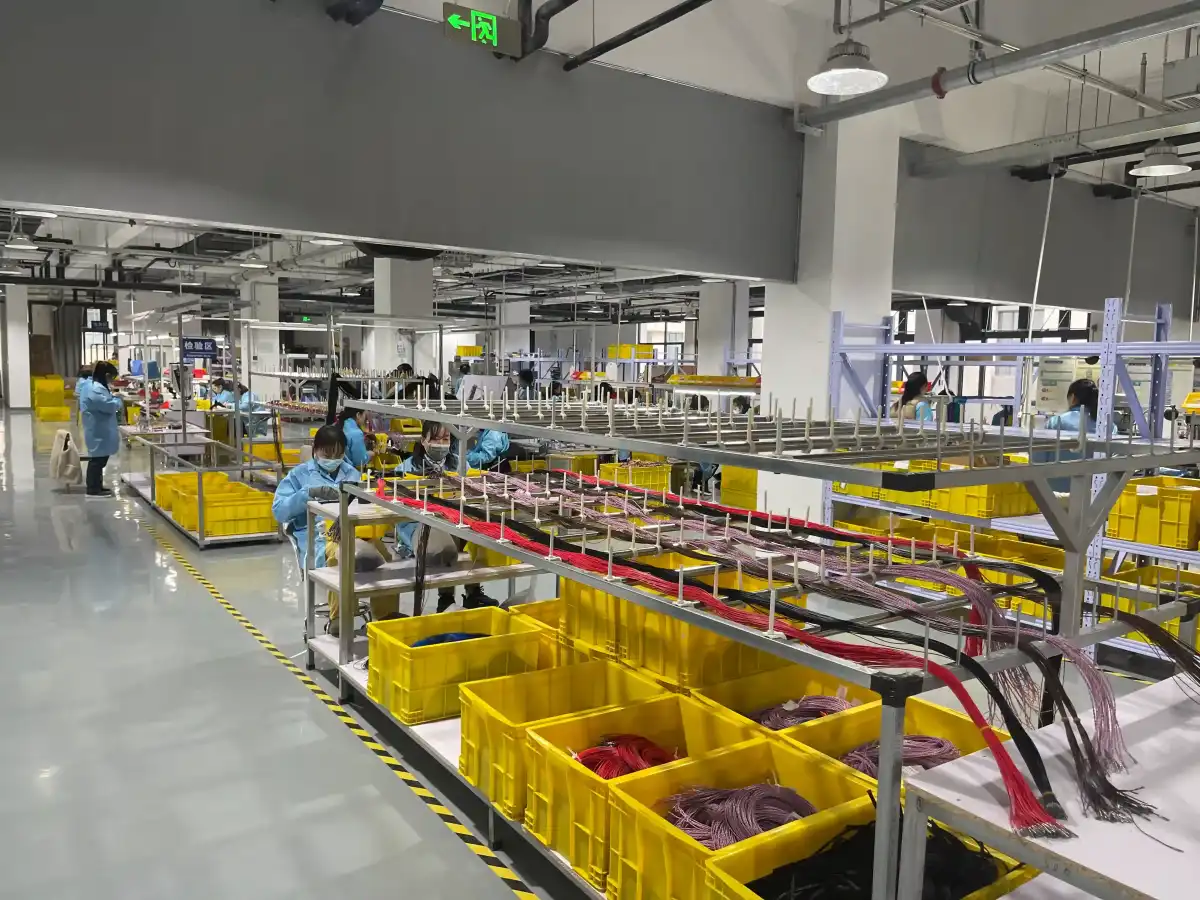
After requirements are released, VeinWire coordinates the control plan and places the order with the manufacturing partner. The partner's operators build from a strip chart tied to the connector OEM datasheet and inspect center conductor exposure, dielectric face, braid foldback, ferrule position, and jacket support before crimp release. The partner uses Cirris 1000H fixtures for continuity and shorts where the assembly geometry supports it and adds customer-defined insertion-loss or VSWR checks through the agreed fixture for RF-sensitive builds. The acceptance threshold belongs in the drawing because a 1 GHz antenna lead and a 6 GHz sensor jumper should not share the same limit by habit.
The manufacturing partner sets sampling by program risk within the customer-approved control plan. A prototype lot may get 100% visual and 100% continuity, while a mature industrial lot can move to AQL sampling for cosmetic checks after first-article approval. The partner keeps crimp-height and pull checks tied to the terminal or connector OEM requirement, and VeinWire reviews the test evidence against the agreed failure modes.
Case in production: A 3D vision and industrial measurement OEM required strict intellectual property protection before engaging with a contract manufacturer for custom cable assemblies.
Challenge: The customer's procurement process involved a multi-tier approval system and a strict NDA requirement, causing a 3-month vetting period where technical specifications could not be shared, delaying the quoting process.
What we did: Promptly executed the NDA, provided comprehensive company background and capability data to pass the customer's HQ and Supply Chain Manager vetting, and rapidly generated a detailed quote for the custom harness once specs were released.
Result: Successfully passed the stringent vendor qualification process, secured the signed NDA, and received the formal inquiry with detailed drawings, quoting a 4-week lead time for the custom assembly.
Concrete numbers: 3-month vetting phase, 1x20 Pin Samtec connector, 1x10 Pin Samtec connector, 100mm cable length, 4-week lead time
When to contact us
Bring us in before the RF connector is frozen if the assembly has mixed 50 ohm and 75 ohm paths, compact micro-coax, FAKRA keying, outdoor service, vibration exposure, or a customer-mandated RF test limit. We are also a fit when a pilot lot of 5-50 assemblies has to scale into 500-5000 pieces without changing the connector family after qualification.
Have a drawing or BOM? Submit it at /contact — engineering walks every drawing within 4 business hours.