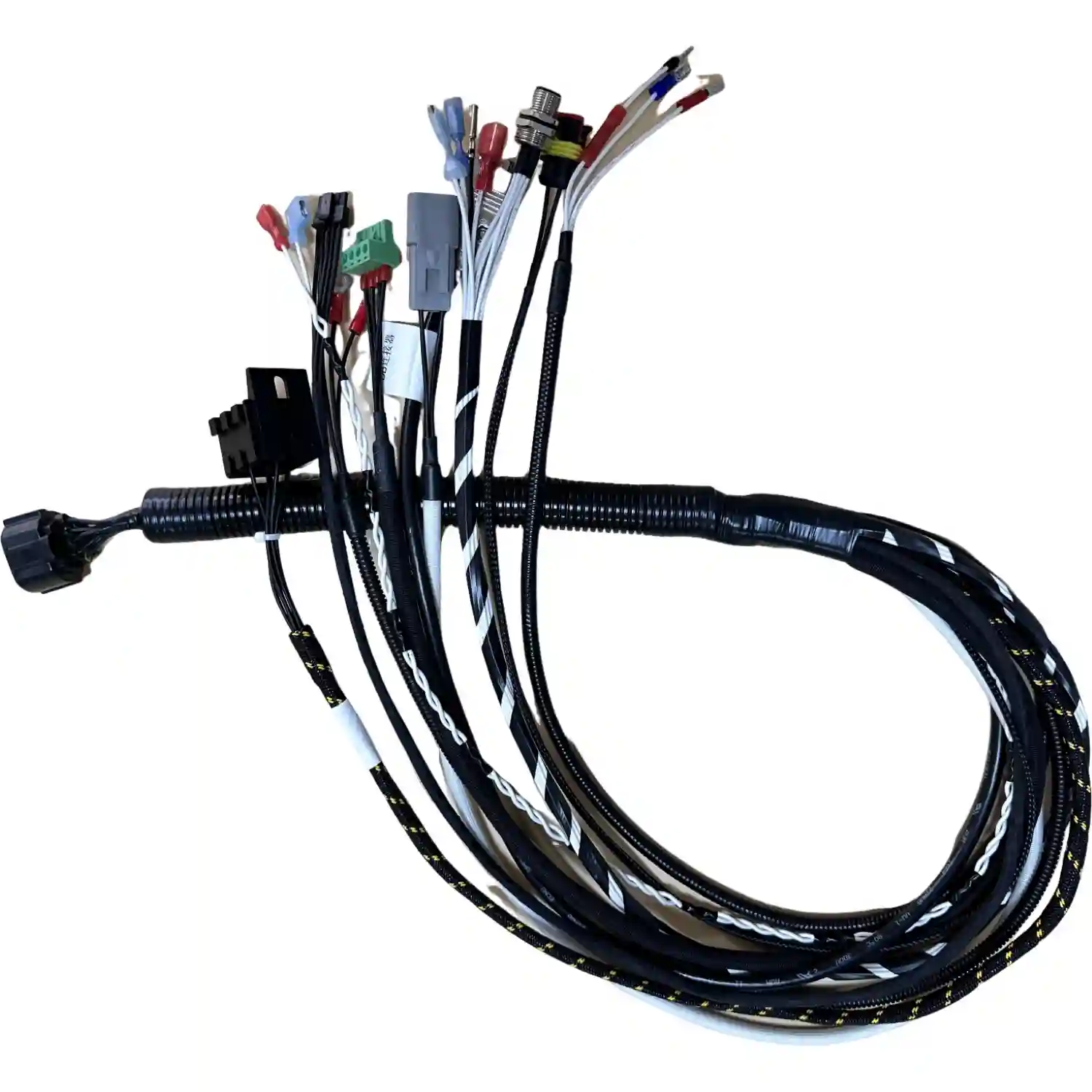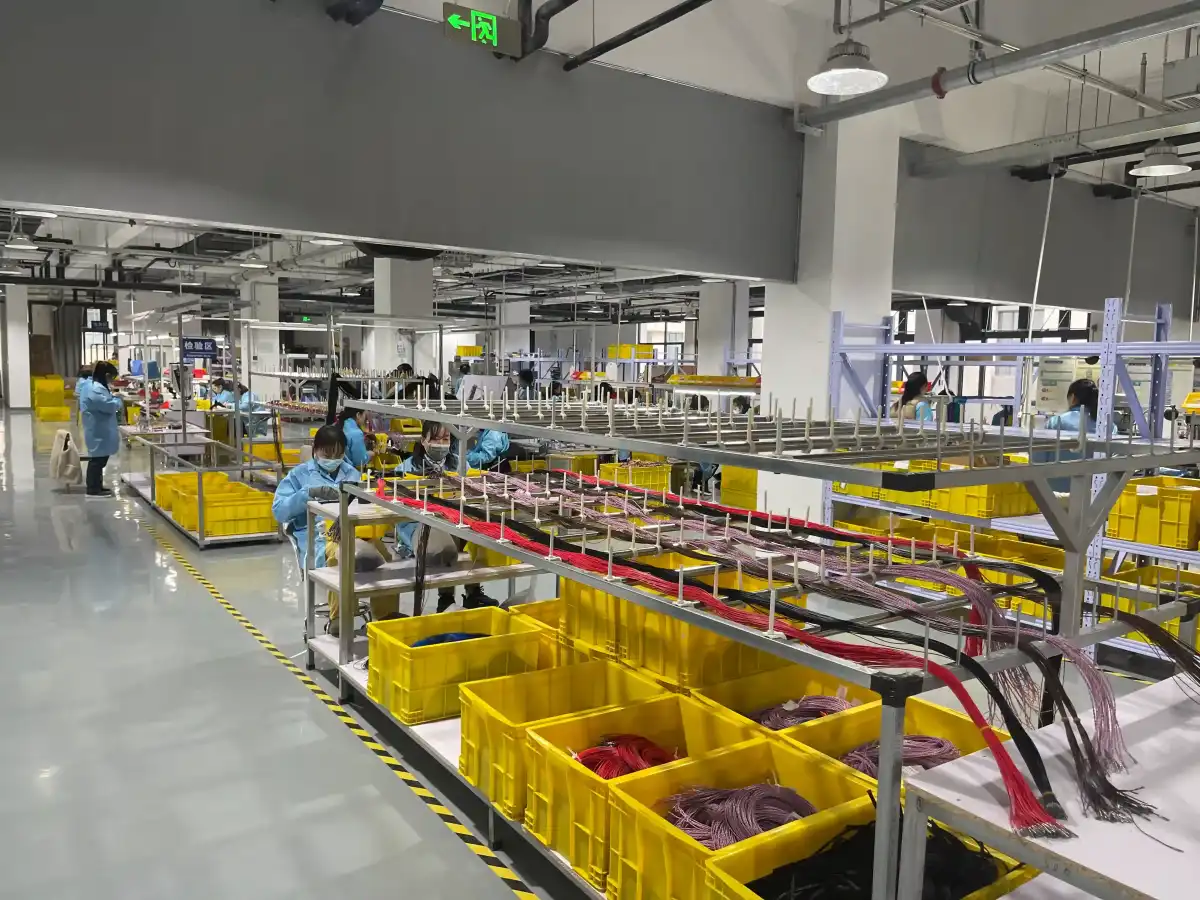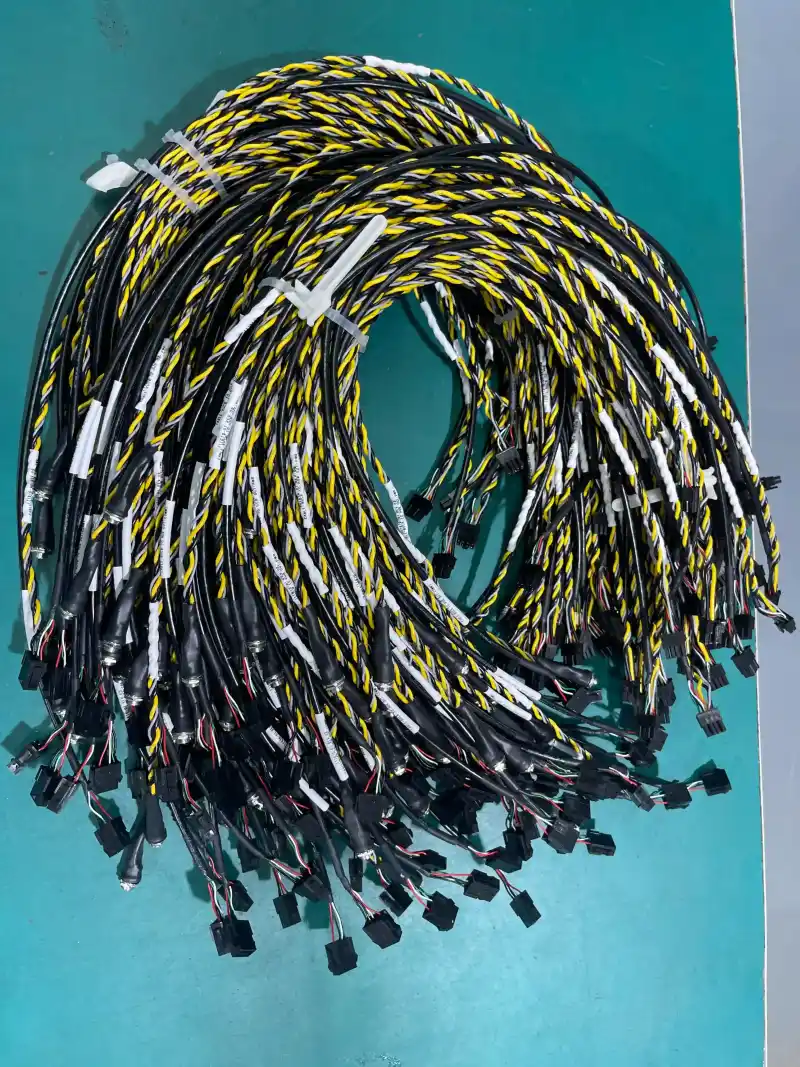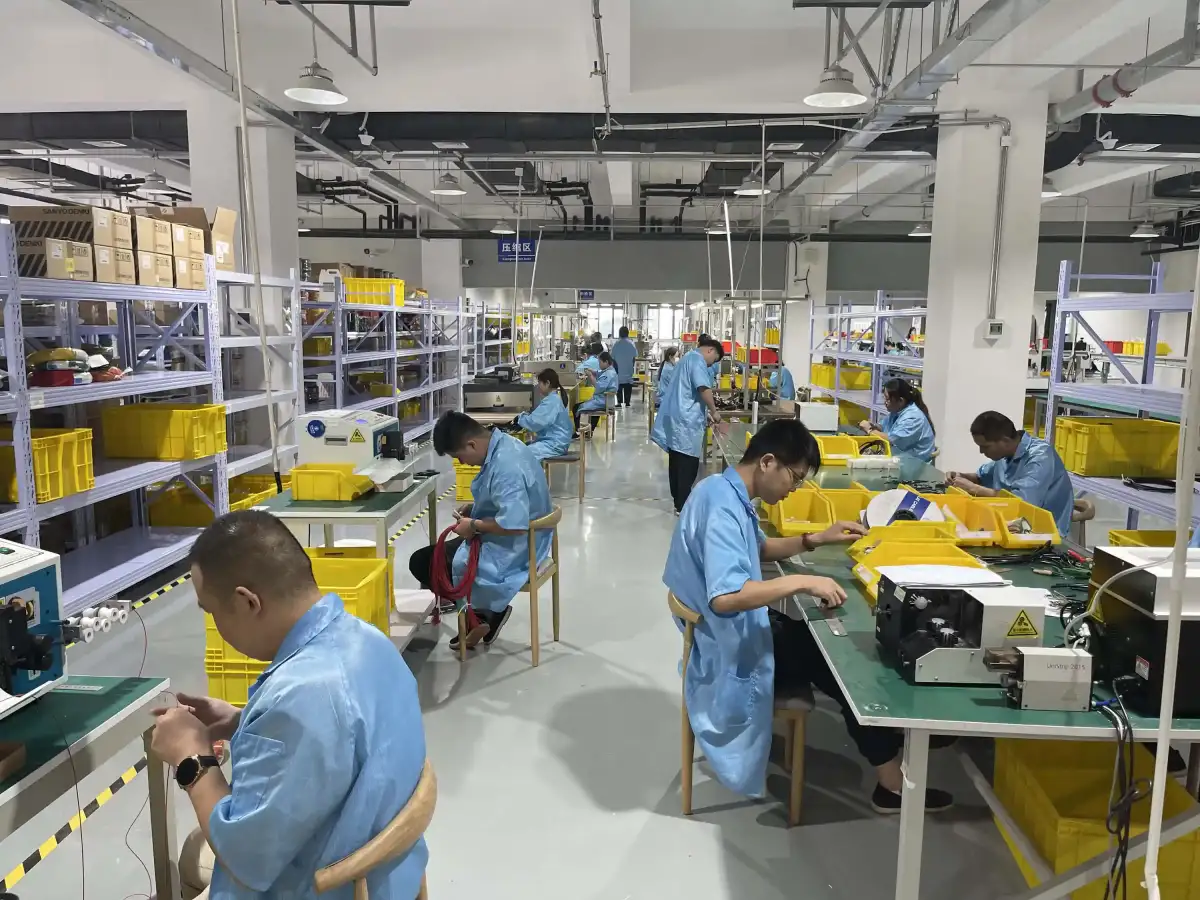

A 75 ohm coax line can pass continuity and still lose the signal budget. The usual miss is simple: RG-59 was kept because the sample routed cleanly through a tight enclosure, then the production run grew to 25 m and video margin disappeared. RG-6 and RG-59 are not interchangeable just because both accept familiar F-type or BNC terminations.
For OEM Cable Assembly (hub) work, the decision is less about the name printed on the jacket and more about four controlled items: impedance, attenuation per length, minimum bend radius, and connector ferrule geometry. If those four are not frozen before RFQ, procurement will compare prices for assemblies that are not electrically equivalent.
The real difference between RG-6 and RG-59
RG-6 and RG-59 are both commonly specified as 75 ohm coaxial cable families. RG-6 is the larger, lower-loss option. RG-59 is smaller, easier to route, and acceptable for short analog video, lab jumpers, and compact equipment wiring where the frequency and length budget are forgiving.
| Selection item | RG-6 typical build | RG-59 typical build |
|---|---|---|
| Nominal impedance | 75 ohm | 75 ohm |
| Center conductor | 18 AWG solid copper or copper-clad steel | 20 AWG solid copper or copper-clad steel |
| Finished cable OD | About 6.8 to 7.0 mm | About 6.1 to 6.2 mm |
| 1 GHz attenuation budget | Roughly 18 to 22 dB per 100 m by cable construction | Roughly 32 to 40 dB per 100 m by cable construction |
| Best fit | Longer CATV, antenna, modem, and low-loss 75 ohm runs | Short video, CCTV, bench, and space-constrained internal runs |
Those numbers are not a replacement for the cable manufacturer's datasheet. Foam dielectric, braid coverage, foil construction, copper-clad steel, and stranded center conductors all move the loss and flexibility. They are the screening numbers we use when a buyer asks whether the cheaper RG-59 assembly can replace RG-6 in a fixed harness.
Use RG-6 when loss matters more than routing space
RG-6 earns its larger diameter on longer runs. If the assembly is carrying broadband, satellite, antenna, modem, SDI-adjacent video, or any 75 ohm signal above a few hundred MHz, the lower attenuation usually pays for itself before the first field return. A 30 m run that is harmless at baseband video can become marginal at 1 GHz if the cable choice adds 5 to 6 dB more loss than the receiver budget allows.
The practical cost is mechanical. RG-6 takes more bend room, more connector mass, and a larger strain-relief envelope. We treat 10x cable OD as a conservative starting bend-radius check, which means roughly 70 mm for many RG-6 constructions. If the drawing routes a 180-degree bend immediately behind a bulkhead F connector, the cable may pass first article and then crack the dielectric or loosen the ferrule after handling.
RG-6 is usually the better answer for outdoor antenna leads, equipment cabinets with meter-scale routing, and 75 ohm production builds where the drawing already calls for return-loss or insertion-loss limits. In those cases, the assembly belongs in the same quoting path as our Coaxial Cable Assemblies, not in a generic wire harness bucket.
Use RG-59 when the run is short and routing is the constraint
RG-59 still has a legitimate place. It is easier to dress through tight panels, easier to package in short service loops, and often adequate for CCTV, baseband video, and short 75 ohm links inside equipment. The mistake is letting "short" stay undefined. Our DFM question is direct: what is the frequency, what is the finished length, and what insertion-loss limit will incoming inspection enforce?
For a 300 mm BNC jumper inside a test fixture, RG-59 may be the cleaner build. For a 25 m camera line in a washdown production cell, RG-6 is usually the safer electrical choice even if it forces a larger grommet. If the assembly exits a moving door, cabinet arm, or service panel, RG-59 can reduce cable memory and connector side-load, but the bend radius still has to be called out. A smaller cable is not permission to fold coax at the connector exit.
Short-run coax also creates connector substitution risk. A buyer may approve "BNC male both ends" and miss that the ferrule and dielectric support are cable-specific. The strip dimensions for RG-59, RG-6, RG-179, and RG-316 are different even when the mating interface looks the same. That is why our RF Cable Assemblies intake asks for cable family, connector manufacturer, finished length, length tolerance, and test limit on the first pass.
Connector and tooling choices decide whether the assembly survives production
The connector face does not tell the whole story. F-type compression connectors, 75 ohm BNC, DIN 1.0/2.3, and panel-feedthrough variants each need a connector body matched to the cable OD, dielectric diameter, braid stack, and center conductor. An RG-6 connector forced onto RG-59 can look seated while the ferrule fails pull or the dielectric floats behind the reference plane. An RG-59 connector forced onto RG-6 may crush the dielectric enough to create return-loss drift.
On controlled RF builds, the manufacturing partner's work instructions name the tooling, not just the connector. The partner loads Daniels DMC AFM8, M22520/5-01, Pasternack PE5026, or connector-OEM compression tooling by cable and connector combination and checks center conductor trim to +/-0.1 mm where the connector design makes that dimension critical. The partner uses Cirris 1000H fixtures for continuity and shorts and Keysight FieldFox N9952A sweep data or customer-specified return-loss testing for RF-sensitive lots.
Standards language belongs in the drawing. IPC/WHMA-A-620 workmanship controls stripping damage, shield termination, soldering where used, strain relief, and inspection criteria. UL 758 matters when the cable assembly is part of listed equipment wiring. MIL-DTL-17 may appear on military coax callouts, but commercial RG-6 and RG-59 should still be governed by the exact cable manufacturer's datasheet and the customer's acceptance limits.
How VeinWire handles this on customer programs
We start with a DFM gate before pricing: 75 ohm path, cable family, cable construction, frequency range, maximum insertion loss, connector SKU, finished length, bend radius, jacket requirement, and operating environment. If the RFQ only says "RG6, F connectors, 2 m," engineering asks whether the center conductor is copper or copper-clad steel, whether the line sees outdoor UV, and whether the customer needs a lot-level sweep report.
After requirements are released, VeinWire coordinates the control plan and places the order with the manufacturing partner. During first article, the partner's operators build from a strip chart tied to the connector datasheet and inspect jacket strip, braid foldback, foil retention, dielectric face, center conductor protrusion, and ferrule position before releasing the crimp or compression step. For production lots, the partner runs 100% continuity and isolation, then applies AQL 1.0 sampling for customer-defined RF sweeps. For rugged equipment, enclosure wiring, or mixed power-plus-coax harnesses, the partner applies the specified strain-relief and packaging controls.
This is also where quoting quality matters. A clean BOM should name "RG-6/U, 75 ohm, 18 AWG center conductor, F-type compression plug, 1000 mm +/-5 mm, 100% continuity, return loss per drawing" instead of "coax cable." The difference is not wording. It determines stock, ferrule, tool, test fixture, and whether the supplier can hold the line after pilot approval.
Case in production: A mining equipment integrator sought a supplier for custom low-to-moderate volume wiring harnesses, with projected significant volume scaling over a three-year horizon.
Challenge: The client needed a supplier capable of handling initial low-volume prototype runs while supporting a rapid scale-up to high volumes, all while competing against their existing vendor base.
What we did: Provided a competitive quotation for the initial low-volume order with a 4-week lead time, confirmed manufacturing-partner flexibility for low-volume starts, and outlined capacity planning for future volume scaling.
Result: Successfully entered the vendor evaluation shortlist, with the client initiating parallel inquiries for additional projects and planning a factory audit to finalize the long-term partnership.
Concrete numbers: 20 sets initial order; 4-week lead time; Forecast: ~50 sets year 1; Forecast: ~500 sets year 2; Forecast: ~1000 sets year 2
When to contact us
Bring VeinWire in when the assembly has a 75 ohm signal path longer than 5 m, a cable-size conflict in the enclosure, mixed coax and discrete wiring, outdoor or high-vibration routing, or a customer inspection plan that includes insertion loss, return loss, VSWR, or lot traceability. We are also a fit when the pilot is 5 to 50 assemblies and the forecast moves into hundreds or thousands after qualification.
Have a drawing or BOM? Submit it at /contact — engineering walks every drawing within 4 business hours.