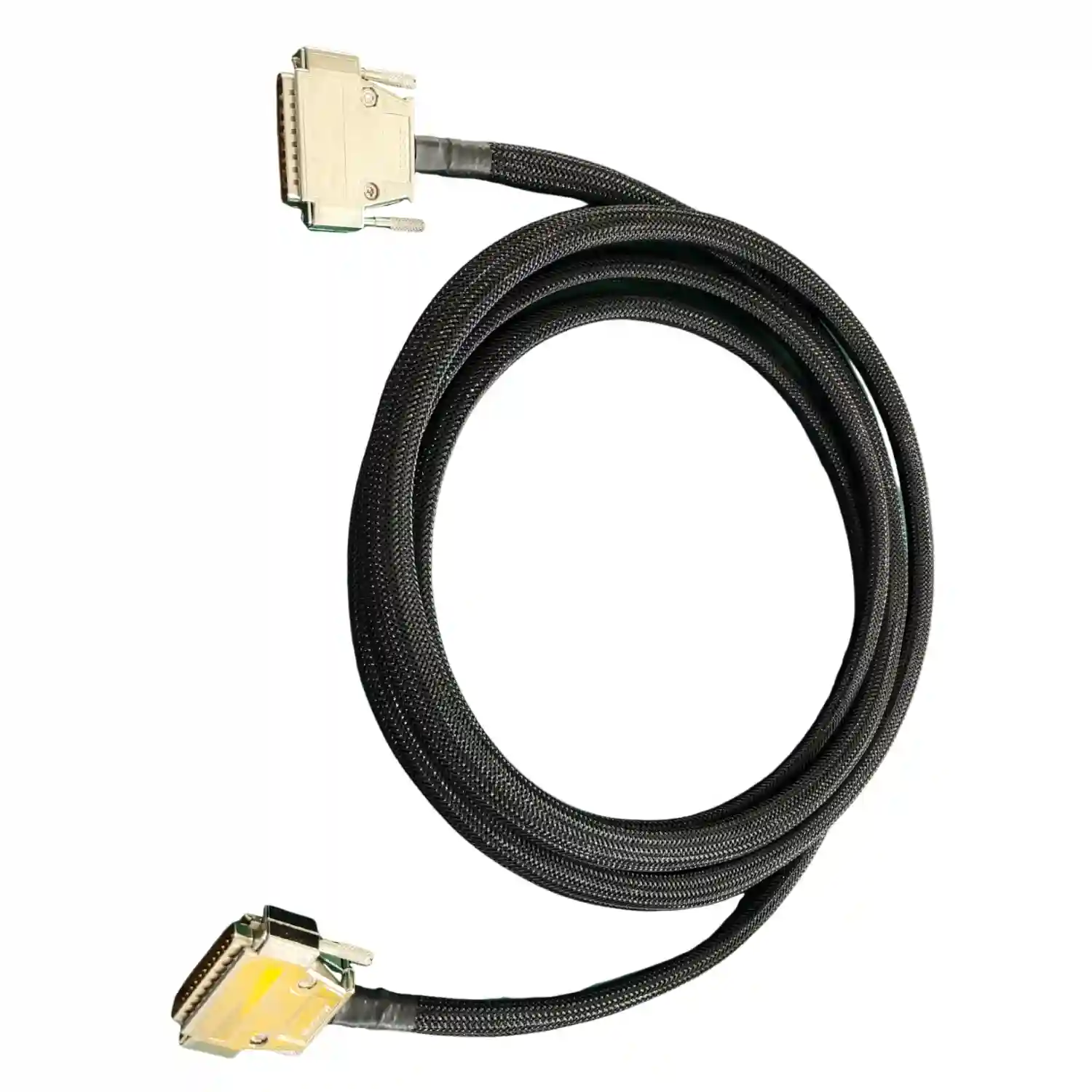

A coax connector mistake rarely shows up as a dead cable. It shows up as a 50 ohm GNSS line mated into a 75 ohm BNC variant, a 100 mm micro-coax jumper with a lifted latch, or VSWR drift after the ferrule crimp ovalizes the dielectric. The connector name is only the first line of the build risk.
This is the selection logic we use before quoting Cable Assembly (hub) programs that carry RF, camera, antenna, sensor, or high-speed embedded signals. The question is not "which coaxial connector is best." The question is which interface keeps impedance, retention, bend radius, and inspection limits under control from prototype through series production.
Start with impedance, not the shell style
Coaxial connector types divide first by impedance. Most antenna, Wi-Fi, GNSS, cellular, radar, and industrial RF links are 50 ohm systems. Broadcast video, SDI, CCTV, and some legacy instrumentation paths are 75 ohm systems. BNC is the classic trap because 50 ohm and 75 ohm versions look close enough for purchasing to confuse, but the dielectric and center-contact geometry are not the same. A mixed-impedance path can pass continuity and still fail insertion-loss or return-loss limits.
For Coaxial Cable Assemblies, we ask for impedance, frequency range, cable family, finished length, length tolerance, connector gender, orientation, mating connector, environmental rating, and test requirement on the first RFQ pass. "BNC to SMA, 300 mm" is not enough information. "50 ohm RG-316, SMA male straight to TNC male right-angle, 300 mm +/-5 mm, 6 GHz max, 100% continuity plus customer-defined VSWR limit" is quotable.
Standards language belongs in the drawing as well. IPC/WHMA-A-620 governs cable and wire harness workmanship. MIL-DTL-39012 is commonly cited for RF coaxial connectors in military-adjacent programs. UL 758 can matter when the cable insulation system is part of the safety file. If the customer requires a specific revision, acceptance class, or certificate of conformance, that clause should appear before the supplier quotes tooling.
Connector type comparison for common OEM builds
| Connector type | Typical impedance | Where it fits | Production risk to control |
|---|---|---|---|
| SMA / RP-SMA | 50 ohm | GNSS, Wi-Fi, sensors, compact instruments | Center-conductor trim, thread torque, cable exit support |
| BNC | 50 or 75 ohm | Lab equipment, video, measurement, service panels | Wrong impedance variant, loose bayonet lock, bend radius at panel |
| TNC | 50 ohm common | Outdoor antenna leads, vibration-prone service access | Thread engagement, connector mass, ferrule crimp geometry |
| FAKRA | 50 ohm common | Automotive camera, GNSS, cellular, antenna modules | Key code mismatch, housing latch seating, inner coax termination |
| MMCX / U.FL / MHF-style | 50 ohm common | Embedded wireless modules and small sensor packages | Limited mating cycles, latch damage, cable used as a pull tab |
| I-PEX micro-coax | Signal-specific | Camera, display, thermal imaging, board-to-board jumpers | AWG#40 handling, impedance test method, fixture repeatability |
The table is a sourcing filter, not a final design rule. A connector family can have multiple grades, plating options, cable groups, and frequency ratings. The final acceptance limit still has to come from the connector OEM datasheet, the cable datasheet, and the customer's drawing.
SMA, BNC, TNC, and N-Type: serviceable RF connectors
SMA is common because it gives a compact threaded interface for 50 ohm RF paths. It is a good fit when the assembly routes inside an enclosure, mates during installation, and does not see daily technician handling. Reverse-polarity SMA must be called out explicitly because the shell may look familiar while the center-contact gender changes. In production, the manufacturing partner controls strip length, dielectric face, braid foldback, ferrule position, and the cable exit. A 0.3 mm center-conductor error can become an RF problem before it becomes a visual problem.
BNC is easier for service technicians because the bayonet lock is fast and visible. The risk is selection discipline: 50 ohm BNC and 75 ohm BNC cannot be treated as purchasing alternates. TNC uses threaded coupling and is usually a better choice when vibration or outdoor service makes a bayonet lock too loose. N-Type is larger, but it earns the space on high-power or outdoor RF assemblies where grip area and environmental sealing matter more than compact routing.
For RF Cable Assemblies, the mechanical exit often matters as much as the nominal connector rating. RG-174, RG-316, 1.13 mm micro-coax, and semi-rigid coax do not load the connector the same way. If the panel hole is fixed before cable bend radius is checked, the assembly can pass first article and fail after installation because the connector shoulder becomes the strain relief.
FAKRA and keyed coax for vehicle-adjacent systems
FAKRA surrounds a coaxial interface with keyed, color-coded plastic housings. That makes it useful for camera, GNSS, cellular, radar, and antenna links where multiple coax paths meet in one vehicle or mobile machine. The key code reduces mis-mating, but it does not remove the RF work. The inner coax still has to be stripped to the connector table, the ferrule still has to be crimped with the correct die, and the outer housing still has to latch without shaving the cable jacket.
We see FAKRA specified on FAKRA Automotive Coaxial builds when the customer wants line-side mistake prevention. That is a valid reason. It is not a substitute for impedance control or test limits. In automotive EV interconnect work, the connector also has to survive vibration, temperature cycling, technician service, and harness routing near power electronics. A camera link that works on the bench can become intermittent if the coax is tie-wrapped into a bend tighter than the cable manufacturer allows.
The RFQ should specify key code, color, cable family, connector orientation, clip or bracket requirement, finished length, and test plan. If the program will scale from 20 pilot sets to 5,000 production sets, freeze those details before PPAP or equivalent approval. Changing FAKRA keying after validation is not a low-risk ECO.
Micro-coax and board-level connectors need different controls
MMCX, U.FL, MHF-style, and I-PEX micro-coax connectors solve a packaging problem. They fit inside cameras, radios, displays, small sensors, medical instruments, and thermal imaging modules where SMA or BNC would be physically impossible. They also narrow the process window. Small coax is easy to nick during stripping, easy to deform during handling, and easy to damage during mating if the operator presses at an angle.
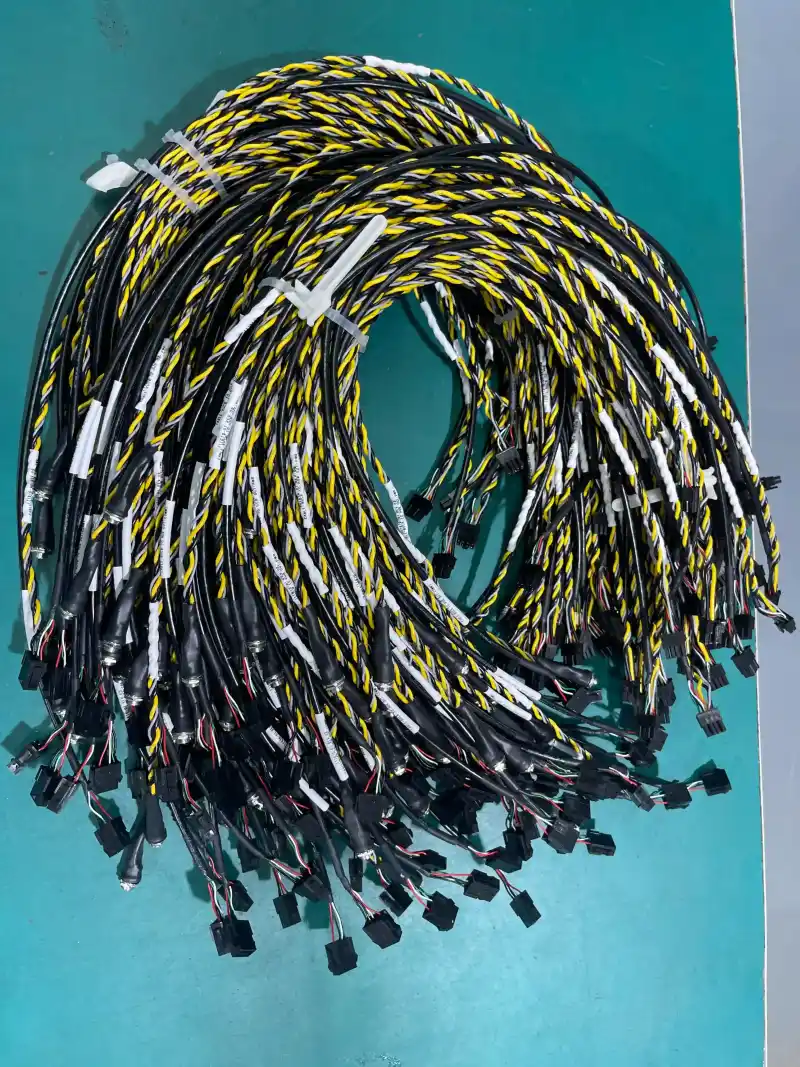
For micro-coax, we treat the connector as a fragile contact system, not just a small RF connector. Finished lengths such as 80 mm, 100 mm, or 150 mm often leave little routing slack. AWG#40 conductors need handling discipline because a damaged strand can pass a quick visual check and still create impedance or intermittent faults under bend. Packaging matters too: loose bagging can destroy a perfect lot if the latch face rubs against adjacent metal shells during transit.
When the drawing calls for an I-PEX CABLINE-VS 1:1 assembly, the inspection plan has to cover pinout, cable orientation, latch seating, continuity, and the customer's impedance test method. A Cirris 1000H fixture can catch opens, shorts, and miswire conditions, but it cannot prove a high-frequency path by itself. If insertion loss, impedance, or VSWR is critical, the RF acceptance method has to be defined on the drawing or in the control plan.
How VeinWire handles this on customer programs
Our coax review starts before quote release. Engineering checks impedance, cable family, connector type, strip length, finished length, bend radius, environmental exposure, mating connector, and the required test evidence. If the RFQ omits a mating half or confuses 50 ohm and 75 ohm language, we stop and clarify before buying parts. That avoids the common failure where procurement approves a cheaper connector that fits mechanically but changes the transmission path.
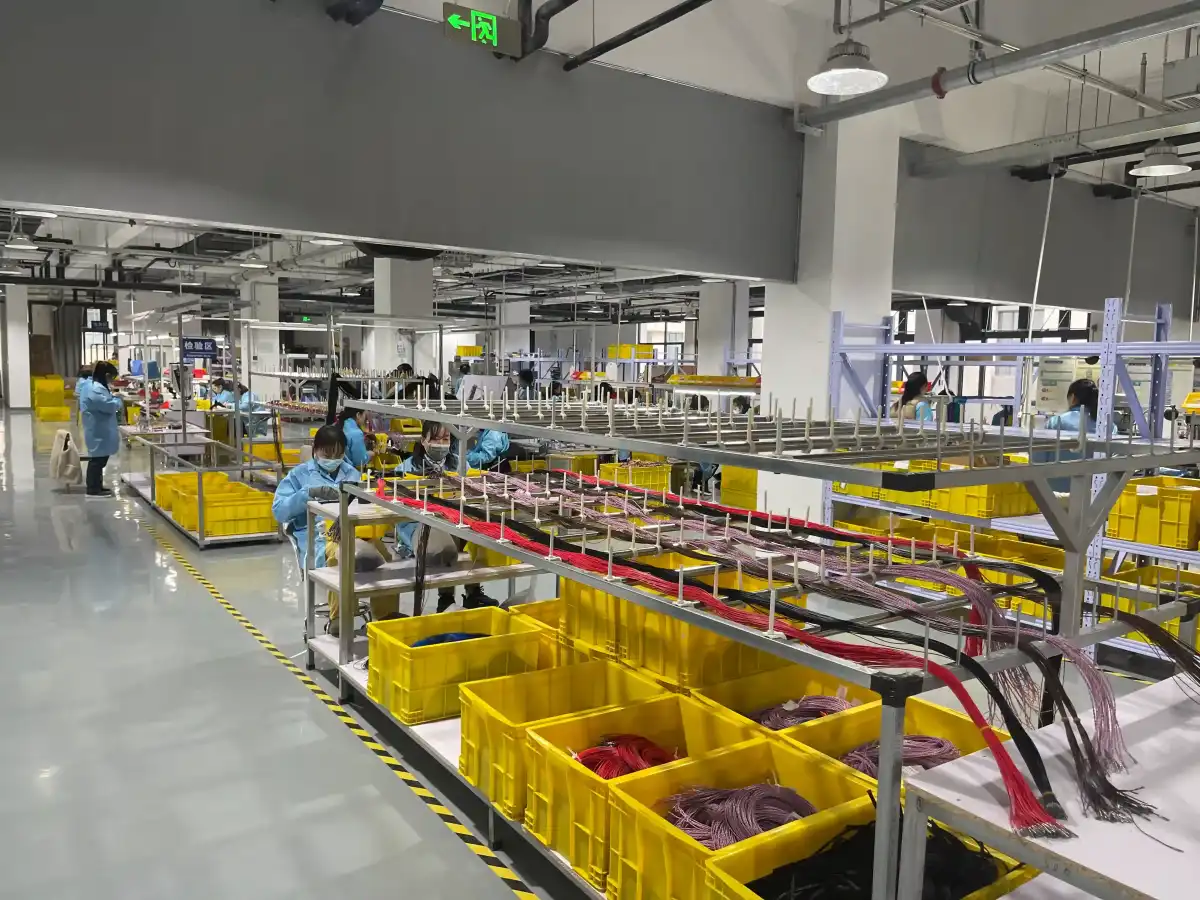
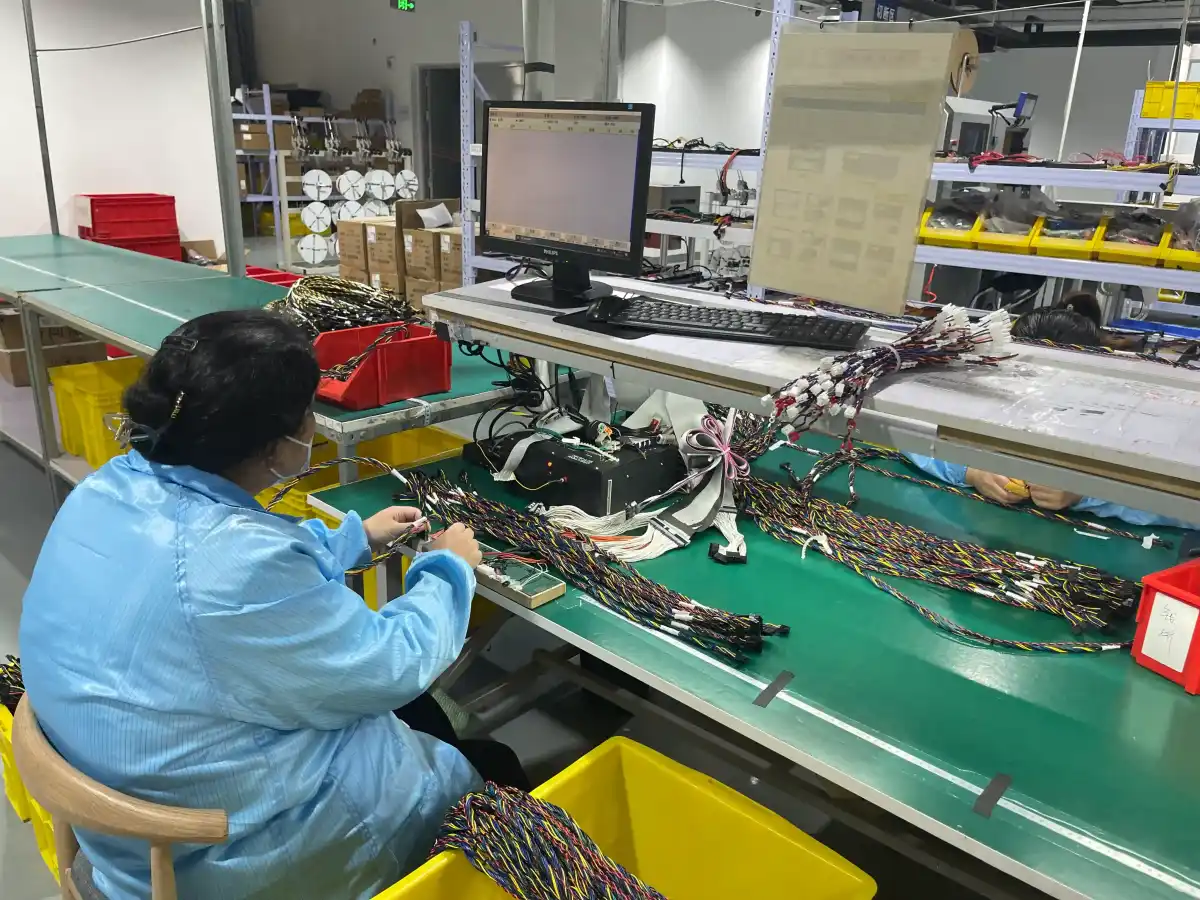
After requirements are released, VeinWire coordinates the control plan and places the order with the manufacturing partner. The partner's operators work from a connector-specific strip chart and control center-conductor exposure, dielectric cut face, braid foldback, ferrule position, crimp height, jacket support, and housing latch engagement. The partner uses named tooling where the connector family requires it, including Amphenol AT-tool setups for applicable contact systems and Cirris 1000H continuity fixtures for opens, shorts, and miswire screening. For RF-sensitive programs, the partner adds customer-defined impedance, insertion-loss, or VSWR checks through the agreed fixture.
The manufacturing partner scales inspection to risk. Prototype and recovery lots can run 100% visual and 100% electrical checks. Mature industrial lots can move cosmetic checks to AQL 1.0 after first-article approval, while crimp and electrical gates stay tied to the drawing and OEM datasheet. VeinWire reviews the resulting evidence against the acceptance limits agreed with the customer.
Case in production: A technology distributor required custom sensor cables with specialized components that had excessively long procurement times.
Challenge: Critical components (PICS sensors, specific connectors) faced 14-16 week lead times, risking severe production delays and requiring upfront material prepayments from the customer.
What we did: Established an early warning mechanism for long lead-time items, negotiated split shipments to deliver available units first, and coordinated expedited shipping using the customer's carrier account to meet critical deadlines.
Result: Mitigated lead time risks, maintained continuous supply, and secured customer acceptance of staggered delivery schedules without losing the program.
Concrete numbers: 14-16 week lead times, split shipments, pre-CNY delivery deadline
When to contact us
Bring VeinWire in before the connector family is frozen if your drawing has mixed 50 ohm and 75 ohm paths, micro-coax below 1.37 mm, FAKRA keying, outdoor service, vibration exposure, or a customer-mandated RF test limit. We are also a fit when a 5-50 unit pilot has to scale into 500-5,000 assemblies without changing the validated connector system.
Have a drawing or BOM? Submit it at /contact — engineering walks every drawing within 4 business hours.