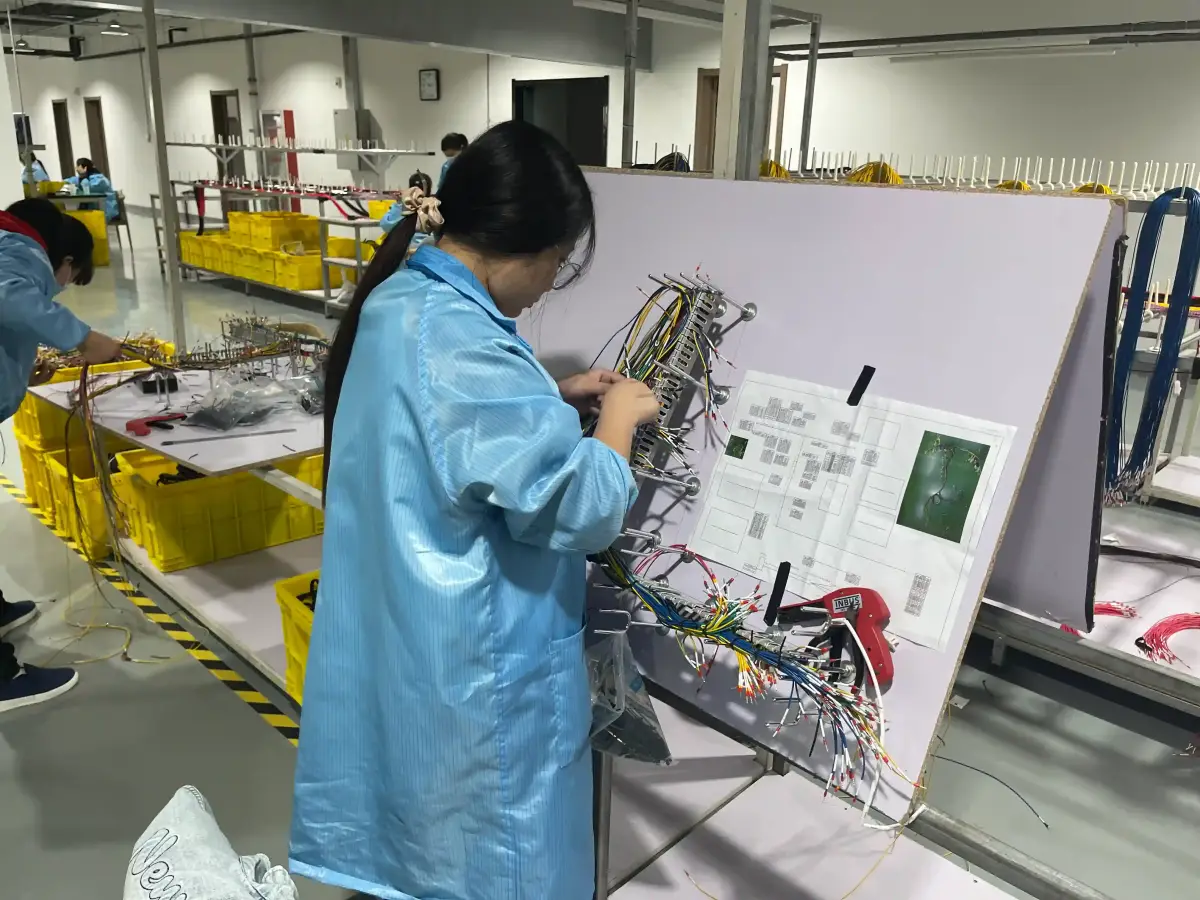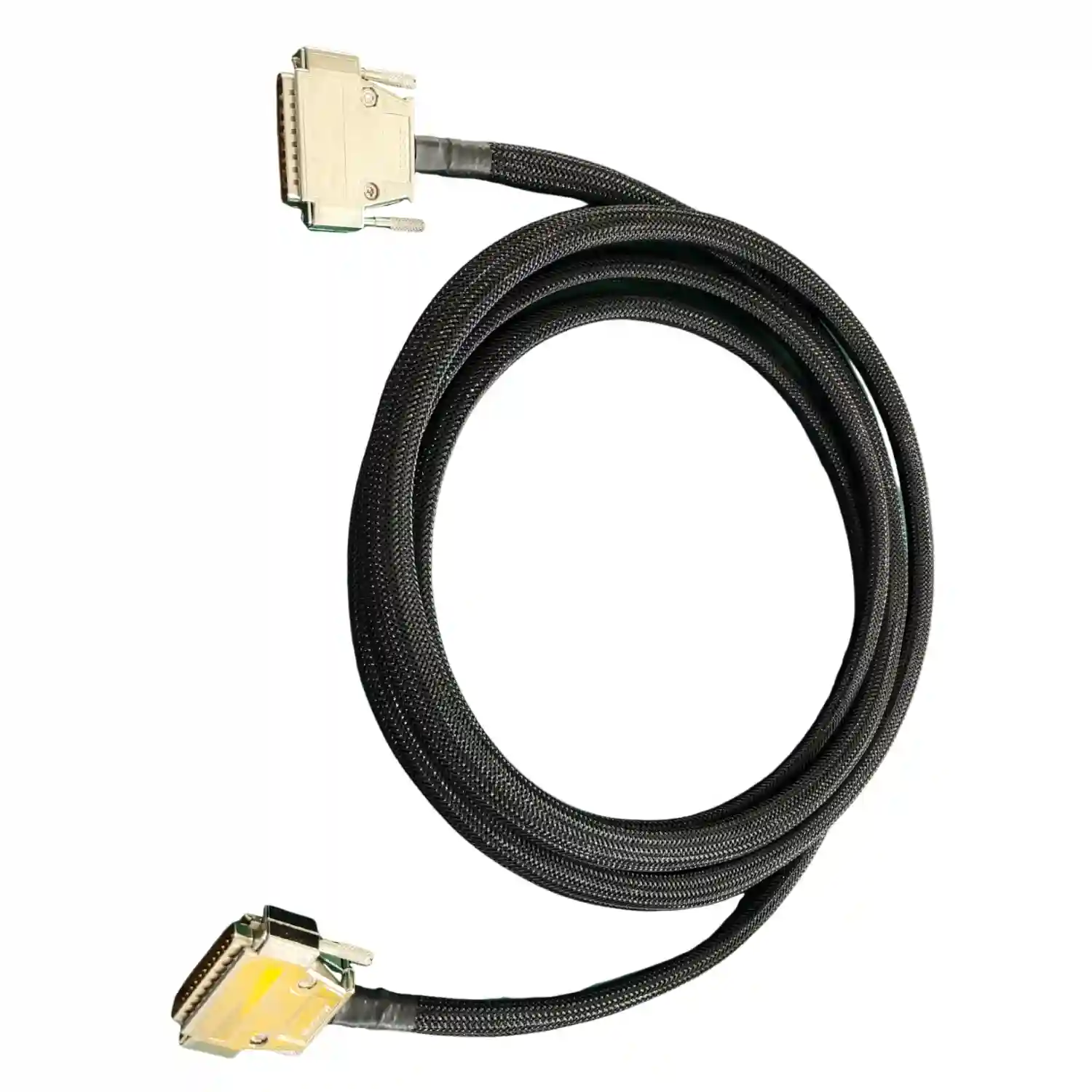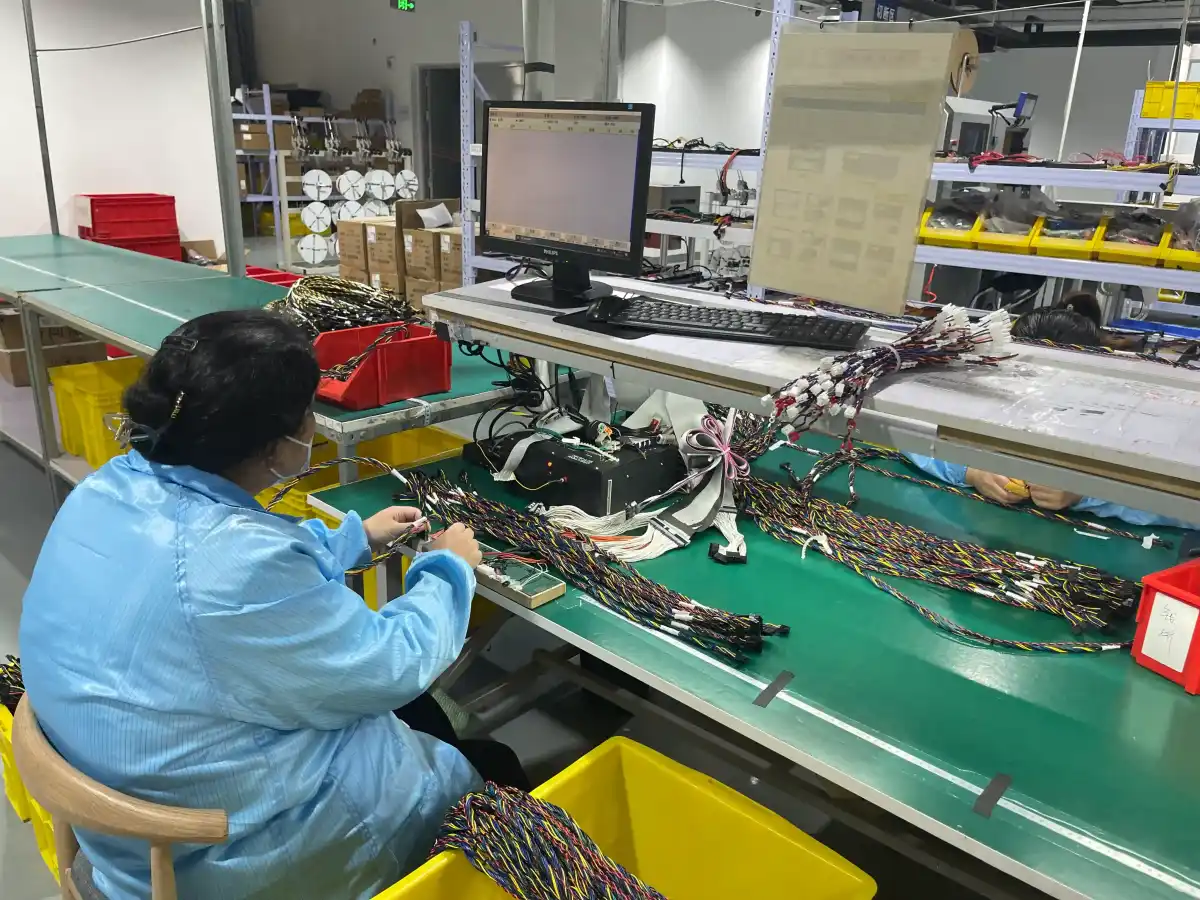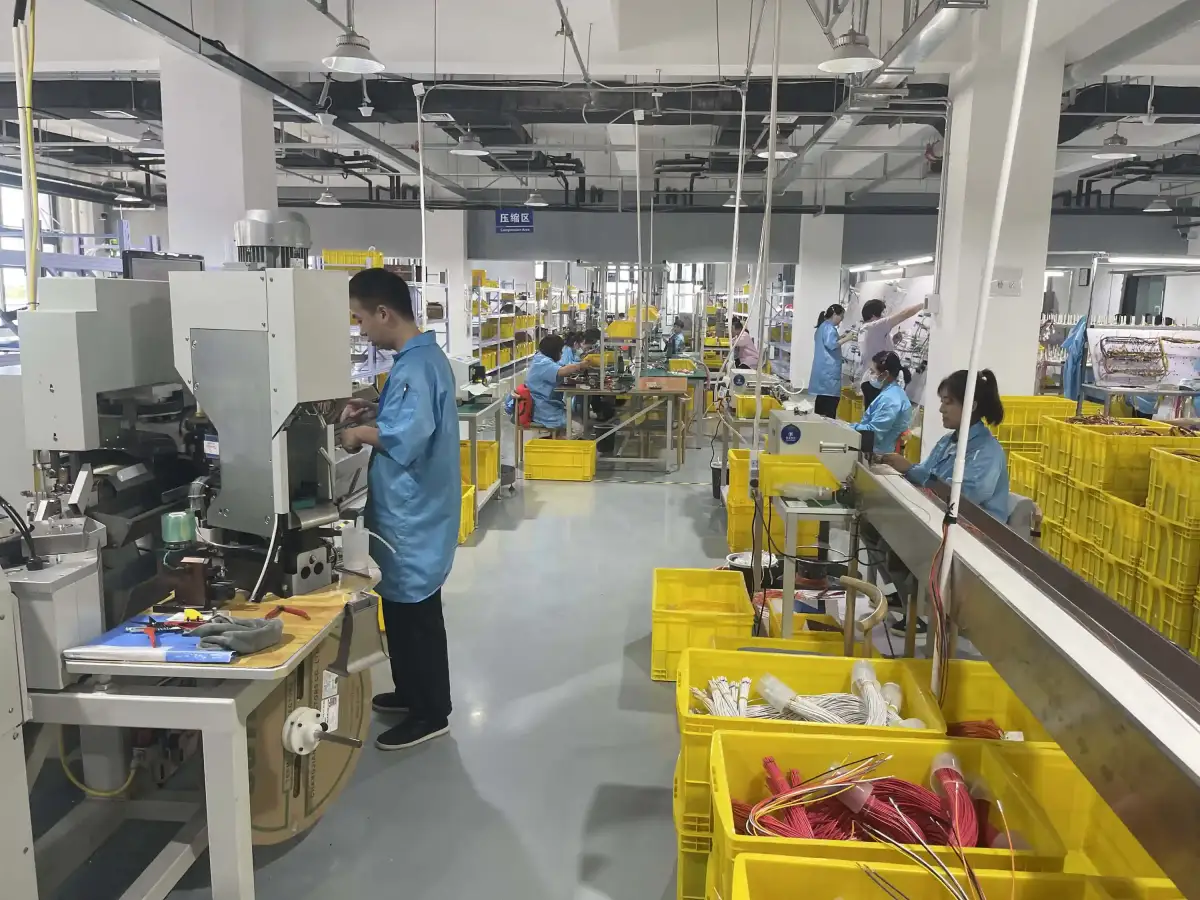

Molex's Mini-Fit family is the most-specified connector series in industrial cable assembly. Across the connector catalogs and inventory available through our supplier network, it is the single biggest line by volume. And yet, we field at least one RFQ a week where the buyer has picked the wrong member of the family — Mini-Fit Jr when they needed Sr, or vice versa — and is locked into a board layout that cannot accept the other one. This article is the decision matrix we wish every buyer had before they froze their PCB connector footprint.
The family at a glance
Molex Mini-Fit is a series of housing-and-terminal connectors aimed at the industrial power and signal market. The members differ primarily in pitch (center-to-center distance between adjacent pins), which dictates current rating, wire range, and PCB footprint:
| Series | Pitch | Max current per circuit | Wire AWG range | Typical application |
|---|---|---|---|---|
| Mini-Fit Jr (5557 / 5559 / 5566) | 4.20 mm | 9 A (per circuit, derated for adjacent) | 18 to 24 AWG | General power-and-signal, industrial control |
| Mini-Fit Sr (43020 / 43025) | 5.70 mm | 13 A | 16 to 22 AWG | Medium-power industrial, lighting drivers |
| Mini-Fit BMI (Plus / Power) | 4.20 mm (mixed) | 11 A high-current pin / 9 A signal | 16 to 24 AWG | Mixed power-and-signal, server PSU |
| Mini-Fit HCS | 4.20 mm | 13 A | 14 to 18 AWG | Higher current in Jr footprint |
These current ratings are per circuit with adjacent circuits energized at the same level — the de facto B2B spec. A single energized pin in isolation rates higher, but no realistic application looks like that. For background on connector pin standards see the pin header article on Wikipedia and the broader electrical connector overview.
The "Mini-Fit Sr" naming trap
Molex never officially called a series "Mini-Fit Sr". The 43020/43025 series is internally referred to as Mini-Fit Sr in trade vocabulary, but the catalog name is "Mini-Fit Sr" only sometimes. When you write "Mini-Fit Sr" in an RFQ, the supplier reads "5.70 mm pitch Mini-Fit family." If you mean a specific Molex part number, write the part number.
This is not pedantic. We have sourced and shipped two different connector families to two different customers, both of whom wrote "Mini-Fit Sr" in their RFQ, because we interpreted the request differently based on application context. Specify by part number always.
When to pick Mini-Fit Jr
- Current per circuit is below 9 A continuous, or below 7 An if all circuits are simultaneously energized at level.
- Wire gauge is in the 18-24 AWG range. See our wire gauge guide for picking the right AWG for your current.
- PCB real estate is at a premium. 4.20 mm pitch is 26% denser than 5.70 mm.
- Cost per circuit matters. Mini-Fit Jr terminals are roughly 15-25% cheaper per piece than Mini-Fit Sr.
- Industrial control, robotics, building automation, low-power lighting drivers, peripheral cables for industrial automation.
When to pick Mini-Fit Sr (43020/43025)
- Current per circuit is in the 9-13 A range.
- Wire gauge needs to be 16 AWG and you do not want to special-order Jr terminals that accept thicker stranded wire.
- The mating cycle count exceeds 30 (Sr is mechanically more rugged for repeated unmating).
- Mating in a tight space where finger access is limited and you need a more positive latch-engagement feel.
- Medium-power industrial, professional lighting drivers, motor controllers, automotive accessory feed where the OEM does not have a stricter spec.
When neither Mini-Fit is the right call
Be honest about the upper limit. Once you cross 13 A per pin or you need any of the following, leave the Mini-Fit family for something else:
- Above 15 A per pin: Move to Mate-N-Lok 350211/350218 (Mini-Fit Sr's bigger sibling) or Molex Sabre at 30 A.
- Sealed/waterproof requirement: Mini-Fit is unsealed. Specify waterproof connectors like Molex MX150L or Deutsch DT/DTM at IP67.
- High voltage above 300V continuous: Mini-Fit Jr is rated 600V max per UL but field experience says use a connector explicitly designed for HV like the Amphenol RADSOK or Molex Imperium for EV traction.
- Fine-pitch signal-only with 30+ pins: JST GH (1.25 mm) or JST SH (1.0 mm) — see our JST cable assembly page.
The redesign trap
The expensive mistake is specifying Mini-Fit Jr on a PCB, freezing the layout, then learning at integration that one of the circuits actually carries 11 A continuous. The PCB footprint is incompatible with Sr. The only options are:
- Move that circuit to a separate connector. Adds a connector, adds a wire route, costs board space.
- Use Mini-Fit HCS terminals in the Jr housing — these are 13 An in the 4.20 mm pitch. Adds about 18% to the connector cost but saves the redesign.
- Redesign the PCB to accept Sr. Slip your launch.
The 30-second check that prevents this trap: list every circuit, list its steady-state current, and verify that 110% of the highest circuit is under your connector's per-pin rating with all adjacent pins energized. Do this before you freeze board layout.
What to put in your RFQ
An adequate Mini-Fit RFQ to a cable assembly shop contains:
- Molex housing part number (e.g., 39-01-2060 for a 6-circuit Mini-Fit Jr receptacle housing).
- Molex terminal part number per circuit (e.g., 39-00-0039 for tin-plated, 18-24 AWG terminal).
- Polarization and key code.
- Mating connector part number — assume the supplier will not infer this.
- Wire AWG, insulation, and pinout map.
For more on what makes a good cable-assembly RFQ, see our 11-item RFQ checklist.
Case in production
An industrial automation distributor required custom cable assemblies for their top-tier clients' motion control systems.
Challenge: The customer needed rapid technical validation and alternative component sourcing for initial small-to-medium batch orders (100-120 units) without prior manufacturing history with the vendor.
What we did: The engineering team reviewed the customer's specifications, proposed equivalent connectors and terminals with detailed datasheets, and offered to coordinate sample testing by the manufacturing partner before mass production, committing to a 2-3 week lead time after payment confirmation.
Result: Successfully secured the first multi-PO program and established a foundation for repeat business, transitioning the customer from inquiry to mass production within 3 weeks.
Concrete numbers: 100-120 unit batches, 2-3 weeks lead time after payment, 5 connector/housing variants per assembly
Bottom line
Mini-Fit Jr is the right answer for most industrial work below 9 A per pin. Mini-Fit Sr fills the 9-13 A gap when board space allows. Above 13 An or in sealed environments, leave the family entirely. And always — always — specify connectors by Molex part number, not by family nickname.