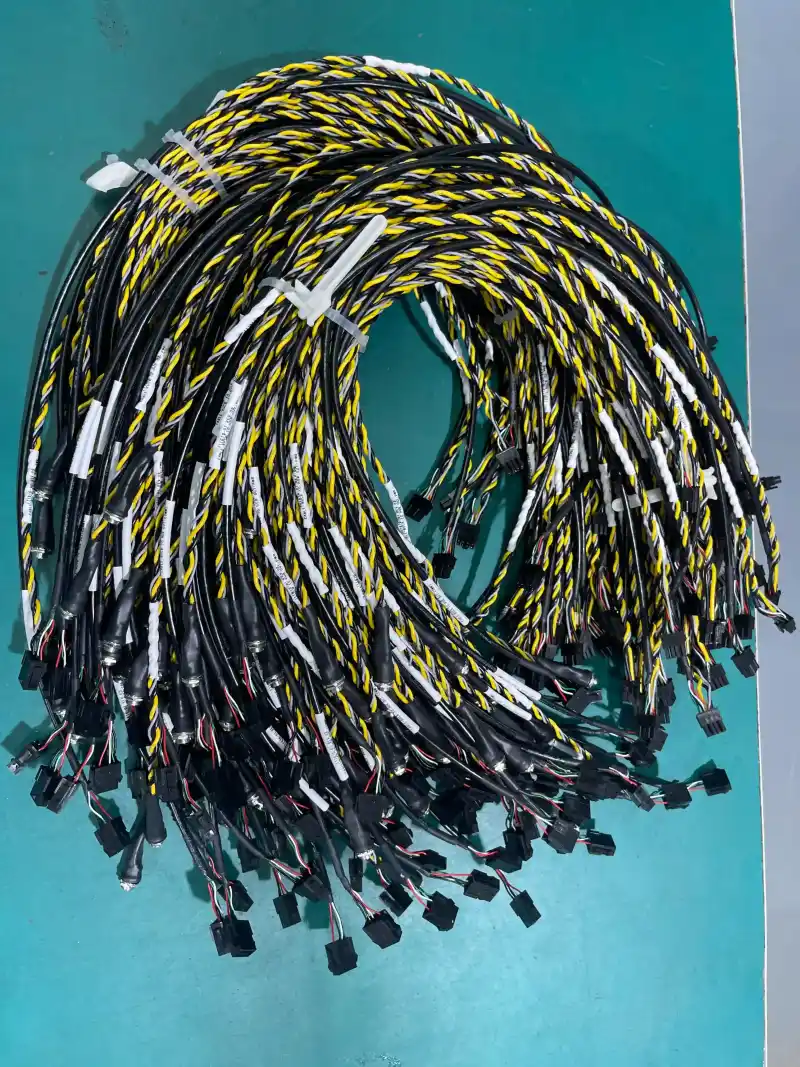

A coaxial assembly can pass continuity at receiving inspection and still stop a camera, antenna, or sensor line on the first pilot run. In one micro-coax program, a significant share of an AWG#40 assembly lot was flagged for high impedance. The drawing problem looked electrical; the root cause sat in specification language and test method.
This is the design review we use before quoting Cable Assembly (hub) work with RF, camera, GNSS, thermal-imaging, or compact sensor signals. Coax is not hard because the concept is hard. It is hard because one missing line on the drawing can change cable construction, connector termination, shield handling, inspection fixture, and the acceptance limit.
Lock impedance, cable family, and test method before connector choice
Coaxial cable is a shielded transmission line that carries signal through a center conductor, dielectric, outer conductor, and jacket. For OEM drawings, the first decision is usually 50 ohm or 75 ohm impedance. A 50 ohm antenna lead and a 75 ohm video path may both use a coaxial connector shape the buyer recognizes, but the dielectric geometry and mating interface are not interchangeable.
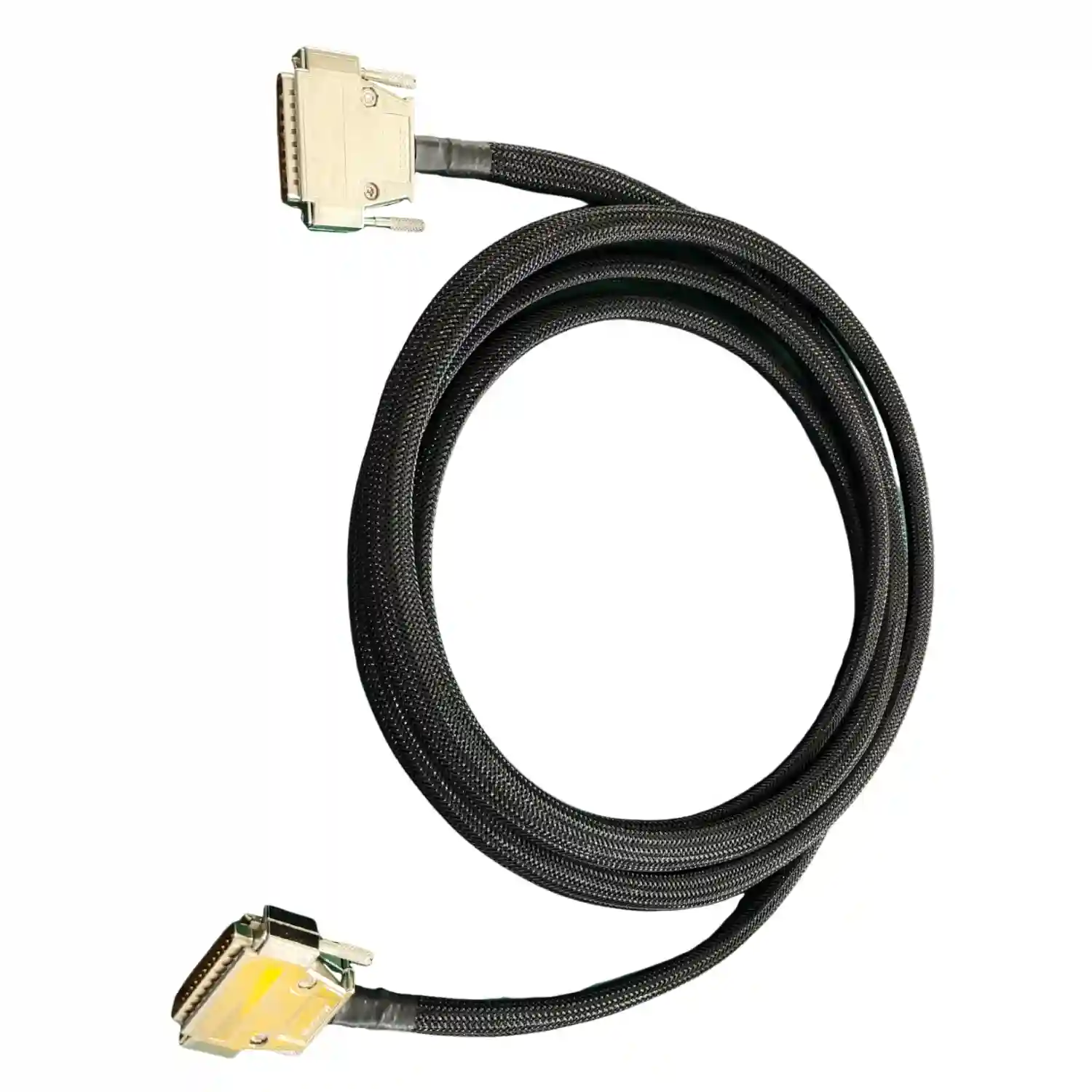
For Coaxial Cable Assemblies, we want the RF path defined before the connector is frozen: nominal impedance, cable family, finished length, length tolerance, operating frequency range, mating connector, bend route, and test requirement. "SMA to pigtail, 300 mm" is not enough. "50 ohm RG-316, SMA male bulkhead to stripped pigtail, 300 mm +/-5 mm, continuity plus customer insertion-loss limit" is quoteable because the production team knows what has to be controlled.
Micro-coax adds one more constraint: handling damage. A 1.13 mm or AWG#40 cable does not tolerate the same stripping method, bend route, or packaging pressure as RG-316. If the assembly is shorter than 150 mm, the connector exit angle and carton fixture can become part of the electrical design. A tight bend placed 10 mm behind the connector may survive a drawing review and still create intermittent impedance drift after installation.
Shield design is more than braid coverage
The shield path has to be designed as deliberately as the center conductor. The drawing should state whether the outer conductor is terminated 360 degrees under a ferrule, drained through a separate lead, bonded to shell ground, or left isolated at one end. Those four choices behave differently in EMI, assembly inspection, and field service. Leaving the shield language open invites a supplier to choose the easiest termination, not the termination your enclosure and grounding plan assumed.
Shield failures usually hide until the product sees motion, noise, or a second assembly source. A braid folded unevenly under a ferrule can pass a pull check and still leave a partial shield. A long drain lead can make assembly easier while creating an uncontrolled section at high frequency. A jacket stripped 2 mm too far can let the shield short against a panel or neighboring shell. The production control is not a slogan; it is a strip chart, ferrule crimp setting, and inspection photo tied to the released drawing.
For programs moving into Industrial Automation, we also ask where the cable routes: moving arm, fixed cabinet, hot lens module, outdoor antenna, or panel pass-through. A coax jumper that sits inside a static enclosure can use a different strain-relief and packaging plan than a sensor lead flexing every machine cycle.
Connector selection: termination geometry beats catalog habit
SMA, SMB, BNC, TNC, FAKRA, U.FL, MMCX, and I-PEX micro-coax families solve different mechanical problems. The catalog family is only the start. The termination geometry has to match the cable diameter, dielectric, center conductor, braid construction, mating height, and operator tooling. A connector that fits the panel may still be the wrong connector for the cable.
For compact camera, display, and sensor paths, I-PEX Micro-Coax & FPC assemblies need especially tight drawing control. CABLINE-VS 1:1 is not a generic note; it identifies a specific interface expectation. If the drawing allows "equivalent" without defining mate height, pin count, cable pitch, finished length, and test method, purchasing can accidentally approve a substitution that production cannot validate against the original failure mode.
FAKRA is the opposite problem: the automotive color and keying system makes assembly errors less likely, so teams sometimes under-specify the coax inside the keyed housing. The inner coax still needs impedance, cable family, strip dimensions, shield termination, and pull or electrical tests. For mixed RF and power harnesses, we separate RF workmanship from general harness workmanship so IPC/WHMA-A-620 visual acceptance does not get mistaken for RF performance approval.
Put acceptance limits on the drawing
A coaxial drawing should not depend on tribal knowledge. It should tell the supplier what makes the part acceptable and what data comes back with the shipment. IPC/WHMA-A-620 covers cable and harness workmanship; UL 758 applies when appliance wiring material is part of the construction; MIL-DTL-17 and MIL-DTL-39012 appear on military or aerospace-adjacent coax and RF connector programs. Those standards do not replace the electrical acceptance limit for your product.
| Drawing field | What to state | Failure prevented |
|---|---|---|
| Impedance | 50 ohm or 75 ohm, not "RF cable" | Wrong connector or cable dielectric |
| Finished length | Nominal length plus tolerance, such as 100mm +/-2 mm | Routing stress and changed electrical path |
| Conductor size | AWG callout and cable family, with handling limits noted for micro-coax | Strip damage, crimp mismatch, sourcing substitution |
| Shield termination | Ferrule, shell bond, drain lead, or isolated end | EMI drift and ground-plan mismatch |
| Test method | Continuity only, hipot, insertion loss, VSWR, or customer impedance test | False pass on assemblies with high impedance |
The RFQ should carry those fields as early as possible. If your team is still collecting drawings, add cable family, mating connector, and acceptance data before supplier release; those three omissions cause the most quoting loops on coaxial programs.
How VeinWire handles this on customer programs
Our coax review starts before quote release. Engineering checks impedance, connector family, cable family, finished length, bend radius, shield termination, labeling, packaging, and the exact test method. If the drawing omits a mating connector or allows "equivalent" on a micro-coax family, we flag it before procurement loads parts. That review protects both sides: the buyer avoids a silent substitution, and the production line avoids building a part the test fixture cannot judge.
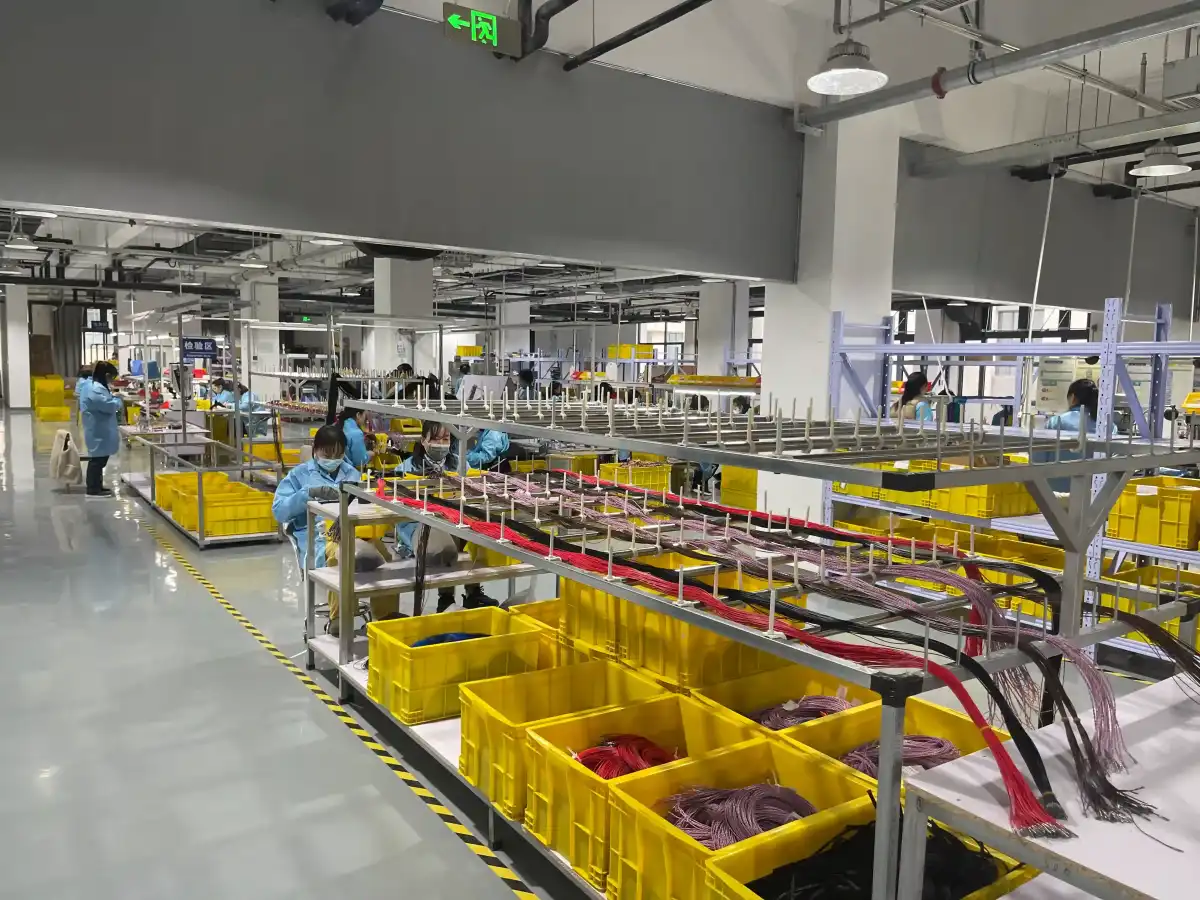
After requirements are released, VeinWire coordinates the control plan and places the order with the manufacturing partner. The partner's operator works from a strip chart and inspection sample, checks center-conductor exposure, dielectric face, braid foldback, ferrule location, jacket support, and connector seating before release, and uses Cirris 1000H fixtures for continuity and shorts where the geometry supports it. For RF-sensitive builds, VeinWire requires the drawing to state the customer's insertion-loss, VSWR, or impedance acceptance method so the partner's test evidence addresses the actual failure mode.
Sampling depends on risk. Prototype and complaint-recovery lots can stay at 100% visual plus 100% electrical test. Mature lots may move cosmetic checks to AQL 1.0 after first-article approval, but shield termination and connector seating stay tied to the control plan. For medical, automotive, or aerospace programs, we also align documentation with ISO 13485, IATF 16949, or AS9100 expectations when the customer flow-down requires it.
Case in production: An industrial smart-device distributor needed to scale a diverse range of custom cable assemblies from initial prototyping to high-volume mass production.
Challenge: Frequent design changes (cable lengths, shielding requirements, connector models) combined with a wide range of order volumes from dozens of samples to tens of thousands of units.
What we did: Coordinated agile sample turnaround and flexible capacity with manufacturing partners, accommodating rapid design iterations while smoothly transitioning to volume production for multiple SKUs (Float sensor, Ethernet, Speaker cables).
Result: Secured a recurring multi-product program across multiple product lines, demonstrating capability to handle high-mix scaling from prototype to mass production.
Concrete numbers: order volumes ranging from dozens (samples) to 20,000+ units, recurring multi-product program, 10+ SKUs managed
When to contact us
Bring VeinWire in before the connector and cable are frozen if your coax assembly uses micro-coax below 150 mm, mixed 50 ohm and 75 ohm paths, FAKRA or I-PEX interfaces, shield-drain choices tied to EMC testing, or a customer-defined insertion-loss limit. We are also a fit when a 5-50 unit pilot has to scale to 500-5000 pieces without changing the cable family after qualification.
Have a drawing or BOM? Submit it at /contact — engineering walks every drawing within 4 business hours.